Total Pageviews

Thursday, 27 February 2014

To the BDA Dietitian called C

As requested, I have removed your first post sent in last night and the other posts sent after. The times of your other posts suggest to me you need more sleep. A good sleep pattern is important together with the diet I recommend for good control of diabetes. I am disappointed you asked for your posts to be removed, you made some very good points and I was hoping to have a worthwhile debate with you. You could have used our humble blog to promote the positive work that more enlightened and forward thinking UK dietitians are conducting. Alas, the chance appears to have gone and I am back to believing from personal experience, and that of other diabetics I know, UK Dietitians do far more harm than good.

For the record, I do not believe all Dietitians are a health hazard to diabetics. I know of some excellent Dietitians, all in the US. My friend Franziska Spritzler is a shining example of progressive and informed upto date information, and I regularly promote her on this blog. I believe one day all Dietitians will offer the option of a low carb high fat diet for the good control of diabetes. Until the BDA wakes up and change their recommendations for diabetics, the carnage will go on.

Eddie

Link to Franziska Spritzler the low carb dietitian here.

Wednesday, 26 February 2014

Older Patients with T2DM and Comorbidities Don't Feel Heard

Responses in focus groups point to a "disconnect" between patients with these conditions and their providers.... 


Prevalence of type 2 diabetes has increased drastically in recent years, and can be expected to increase even more in the future. Not only is diabetes the seventh leading cause of death in the U.S., but its management and complications make up 23% of current health care expenditures. Most adults with T2DM have at least one comorbid condition, and almost half of them have three or more. It is therefore important that we focus on the most effective management of each patient's diabetes to reduce their risk of complications and lower the economic cost of this disease.

Beverly, EA. et al. evaluated patients' perceived challenges with their providers when treating their many health conditions to see how patient-physician interactions could be improved to provide better care and improve health outcomes.

This study involved a total of 32 patients with T2DM and at least one other chronic health condition. All patients were ≥60 years old, diagnosed with T2DM at least 1 year previous, and also diagnosed with one or more additional chronic conditions. They were recruited via a university diabetes database and also through direct mailings and flyers in the community. The patients were divided into 8 focus groups of 2-6 patients each, from which data was collected through semi-structured group interviews. These interviews were centered on patients' experiences and opinions about their health care plans for their diabetes and comorbid conditions. During these interviews, patients were asked open-ended questions about their perceived challenges with managing type 2 diabetes among their other chronic conditions, how they coped with potentially interacting conditions, and whether they perceived some conditions as being more severe/important than others. A multidisciplinary team then analyzed the data by marking and categorizing key words, phrases and texts to identify codes that would describe the overriding themes.

The 6 most commonly reported chronic conditions reported among these patients were hypertension, arthritis, retinopathy, hypercholesterolemia, coronary artery disease, and neuropathy. The main theme found was that older patients felt their providers did not understand and/or appreciate the difficulties that they face every day living with and managing their diabetes and other health conditions. Patients reported a general unwillingness of their providers to treat their diabetes and comorbid conditions. Experiences of limited support and empathy from their providers were also reported. Some patients felt that their providers were insensitive to their remaining years of life particularly because of their older age. Many participants also felt that their preferences for care were not taken into account by their provider. Participants also reported feeling that their care was not addressed to their individual needs and medical history, and desired more tailored treatment regimens specific to their needs. Generally speaking, patients want to have more interaction with their providers so that they can discuss the difficulties they are experiencing and vocalize their preference of treatment.

The patient population in this study was extremely homogenous, as all the patients were white, highly educated, and community-dwelling. These patients also had good glycemic control, which may have affected some of their responses. Further research with a more heterogenous population with varying glycemic control would be more reflective of older adults' experiences with healthcare providers. The responses obtained from the patients in this study point to a "disconnect" between patients with these conditions and their providers. Recent qualitative studies with primary care physicians describe the conflict providers experience with balancing patient preferences for treatment and their professional opinion on the proper care for the patient, along with determining the risks and benefits of following treatment guidelines. Future research should aim to incorporate data from physician-patient pairs to assess communication properly from both sides. Effective patient-provider communication and shared decision-making have been shown to not only improve patient satisfaction, but also increase adherence to treatment plans and improve health outcomes.

http://www.diabetesincontrol.com/

Graham

Paco de Lucía Concierto Aranjuez - Adagio

World-renowned Spanish guitarist Paco de Lucia has died aged 66 in Mexico, reportedly of a heart attack while playing with his children on a beach. RIP Eddie


Diabetes UK national conference to have low carb debate !

"I notice there is an exciting debate at the Diabetes UK conference at Liverpool this year- on the Wednesday afternoon (May 5th); Correction the date should be March 5th.
- its called 'Its Time to stop promoting carbohydrates to people with diabetes'.
With well known dieticians to speak both for and against the motion it should be very exciting and push this important debate into the light a bit.
I have bought my ticket!!"


Southport GP at DCUK


Eddie


They are only allowed 60  minutes for the debate. 
Dietetics debate: “it’s time to 
stop promoting 
carbohydrates to people with 
diabetes” 
14.30 For 
14.50 Against 
15.10 Opportunity for 
speakers to comment on 
opposing viewpoint 
15.20 Questions and vote 
from audience 

Graham


DCUK Your age when diagnosed with type 2?

Recently a thread was started at DCUK called 'Your age when diagnosed with type 2?' by a guy called Rob Mitchell (not a relation) and it makes for very sombre reading. Rob became a type two diabetic at 26 years of age. Even more surprising to me is the fact so many people who have posted, are in their thirties and forties. I have not counted the posts and worked out an average age, but clearly the average age is much younger than I would have expected.


I can think of no logical reason to believe this does not reflect the wider picture across the UK. If you bear in mind only a small percentage of diabetics post on forums and take their diabetes seriously, the overall situation is very grim indeed. I have read of the increase in teenage type two diabetes, but the thread really brings it home how bad the situation has become, and we know it's getting worse.


Not so long ago type two diabetes was regarded as an old man's disease, now it's becoming a disease that affects all age groups. Our team members, with the exception of Paul who is not a type two, and Jan who is not a diabetic, are all in our sixties. We did not develop type two diabetes until our late fifties or mid sixties. We have I believe a reasonable idea of our life expectancy given our ages, state of general health and diabetes control. This being said, what chance of many young type two diabetics getting to sixty or seventy years of age and remaining complication free, or even living to that age ? virtually nil I reckon, unless !


These youngsters, for that is what many of them are to me, must control their diabetes with utmost dedication. Control of blood glucose must become their number one priority in their life. You may say what kind of a life is that, and you may be right, but if these people want a life, an active life with no diabetic complications, they have no choice.

“Some say I am too strict with control of blood glucose, I have no other choice, nothing else works”

Doctor Richard Bernstein arguably the worlds leading expert on blood glucose control.

Eddie


Pancake day Tuesday the 4th of March.


These crepes/pancakes are virtually carb. free and are very easy to make. Note they do not taste of cheese.

Ingredients.

200 Grams of ricotta cheese
3 eggs
I teaspoon of cinnamon
A splash of milk

Method

Mix the cheese, eggs and cinnamon into a small mixing bowl. Add a splash of milk if the mix is too thick to run freely. Place a small knob of butter into a frying pan, I use a small omelette pan 8". Heat the butter and spoon in 3 table spoons of mix. Fry until firm then turn over and cook for one minute or until the crepe is starting to brown. This mix makes between 6 and 8 crepes/pancakes. Allow to cool and fill with cream cheese and finely chopped spring onions or smoked salmon and asparagus tips, whatever you like. Roll up the crepe and enjoy. Great at any time and very good for the lunch box or picnics. Also great warmed up with some low carb berries a scoop of low carb ice cream and double cream.

Eddie


Bohemian Polypharmacy

Thanks to Dr Malcolm Kendrick @ http://drmalcolmkendrick.org/  for bringing this to our attention.
Graham

Tuesday, 25 February 2014

Statins pose risk to healthy patients

BY BARBARA H. ROBERTS

I am in complete agreement with my colleagues, Doctors Karen E. Aspry and Charles B. Eaton, on the importance of shared decision making when it comes to placing patients without established heart disease on statins. Their Feb. 18 Commentary piece “Fight heart disease with shared decisions about statins” has much to commend it.

Where we differ is in what we believe about the new statin guidelines, which were released last November by the American Heart Association (AHA) and the American College of Cardiology (ACC).

There are serious problems with the guidelines, as well as with the clinical trials on which they are based. The majority of the physicians/scientists who wrote the guidelines, including both of the co-chairs, had current or recent ties to the pharmaceutical companies that manufacture statins. In other words, they had conflicts of interest.

The recommendations for putting people on statins were based on clinical trials comparing statins to a dummy drug, called a placebo. These trials were paid for by the drug companies that made the statin being studied. In an article published in the Journal of the American Medical Association in 2003, industry-sponsored trials were found to be almost four times more likely to show a “positive” result for the drug being studied than non-industry sponsored trials.

The AHA and the ACC acknowledged that the new risk calculator that doctors were told to use to determine the risk of heart disease in healthy patients overestimates risk by anywhere from 75 percent to 150 percent. Abiding by these recommendations could add 13 million healthy people to the number already taking statins in the United States. And despite the reassuring words about the safety of statins from Doctors Aspry and. Eaton, statins are far more dangerous than clinical trials indicate. Why is this?

Most clinical trials exclude patients with other chronic diseases, or certain age groups. They are also of limited duration. The largest statin trial in healthy people was stopped after an average follow-up of just under two years. And yet people are being told they must take a statin for life.

In addition, some statin trials had run-in phases, in which anyone who couldn’t tolerate a statin was excluded from the study. In the real world, outside of clinical trials, somewhere between 25 percent and 40 percent of people put on statins stop taking them within two years. The most common side effect, muscle pain, occurs in about 10 percent to 20 percent of people taking statins, and muscle biopsies have shown muscle damage in such people, even when their muscle enzymes (checked to look for muscle injury) are not elevated. Women are more likely than men to suffer this side effect, and to develop diabetes when placed on statins. Other statin side effects include kidney injury, nerve damage, tendon rupture, problems with memory and concentration, and cataracts.

In reality, how much benefit can a healthy person expect from statins? Doctors Aspry and Eaton quote figures of 25 percent reduction in risk from moderate dose statin and an additional 15 percent reduction from high dose statin. But these are relative risk reductions.

To make the math simple, if 2 percent of people on placebo in a study have a cardiac event over five years, and 1 percent of those taking a statin have an event, there is a 50 percent relative risk reduction. But the absolute risk reduction is only 1 percent! You would have to treat 100 people for five years to prevent one event. Ninety-nine of those people would have no benefit from taking the statin but all would be exposed to potential side effects.

Based on studies involving tens of thousands of healthy people, for those who took a statin for five years, 98 percent saw no benefit, 0 percent were prevented from dying, 1.6 percent were prevented from having a heart attack, 0.4 percent were prevented from having a stroke, 1.5 percent were harmed by developing diabetes and 10 percent were harmed by muscle damage. These are the numbers physicians should be discussing with their healthy patients before prescribing statins.

There is a healthy alternative: the Mediterranean diet, a plant-based diet incorporating colorful fruits and vegetables, whole grains, sea food, olive oil as the main source of fat calories, and little meat or processed food. It has no side effects and lowers relative cardiovascular risk to the same degree as statins, both in people with and without vascular disease. That is my choice to reduce risk.


Barbara H. Roberts, M.D., is the director of the Women’s Cardiac Center at the Miriam Hospital and an associate clinical professor of medicine at the Alpert Medical School of Brown University. She is the author of “The Truth About Statins: Risks and Alternatives to Cholesterol-Lowering Drugs.”


Graham

NHS Diabetes Policy: The Human and Financial Costs

cc            Sir David Nicholson

Human Costs
The extent of the human costs of the NHS diabetes policy is tabulated in the following table extracted from:


Complication
Number of people with diabetes experiencing the complication
Angina
117,278
Myocardial Infarction
28,812
Heart Failure
81,452
Stroke
35,120
Major Amputation
3,319
Minor Amputation
5,869
RRT
15,415
Retinopathy Treatment
14,144
DKA
10,434


Financial Costs
The extent of the financial costs of the NHS diabetes policy is extracted from:


Diabetes cost approximately £23.7bn in the UK in 2010/2011: £9.8bn in direct costs and £13.9bn in indirect costs. Direct costs include the costs of diagnosis and retinopathy screening, treatment and management and complications (the cost of complications was estimated at £7.7bn - .79% of direct costs). The indirect costs include mortality costs, productivity loss costs, and social costs for care. Diabetes currently accounts for 10% of the total health resource expenditure. 

Conclusions
“Type 1 and Type 2 diabetes are prominent diseases in the UK and are a significant economic burden. … Complications related to the diseases account for a substantial proportion of the direct health costs. As prevalence increases, the cost of treating complications will grow if current care regimes are maintained”. [My bold]


John

Caprese Chicken …tomatoes and basil

As many readers will know I do a lot of hop, skipping and jumping around the blogs! It is always nice to hear and share stories, exchange recipe ideas etc.

This wonderful recipe for Caprese Chicken I found at Anna’s Down Under Blog, An Evolution, in Body, Mind and Spirit.

The video shows how easy this delicious recipe is to make. It’s definitely on my try out list  …. see what you think.

Thanks to Anna for the link

All the best Jan


The low carb good news never stops !

"I was having plenty of hypos, often on a daily basis. This was while I was on a high carb diet. I could never get the balance right, and had a permanent season ticket on the diabetic roller coaster. Since changing to low carb, I am having a fraction of the hypos I was, and the ones I have had I can easily explain. for instance, a couple of weeks ago my blood sugars were 9.4. I wanted to lower them, so I gave myself 3 units of lispro. I forgot, and repeated the dose 5 minutes later. When I felt weird two hours later and my blood sugars were 1.8, I immediately knew why. My low carb diet has helped me in so many ways, but my brute stupidity has not cleared up yet."

Charles Robin Type one diabetic posting at DCUK on 'advice for going low carb' thread.

Low carbing not just for type two diabetics.

Eddie


Diabetes on Newsnight NHS Boss Sir David Nicholson newly diagnosed type two diabetic !

The info below came in as an email to me today. NHS Boss Sir David Nicholson newly diagnosed type two diabetic. He states in the film he became a diabetic due to his poor diet and lifestyle. The very diet no doubt as his staff push to the nation. Karma ! What do you think ? well worth a watch.

"Did you happen to catch Sir David Nicholson on Newsnight last night? Focussing on the future of the NHS and the increase in long term conditions eg diabetes and the fact that he himself was diagnosed T2 last year? Then making statements about patient responsibility etc with no reference of course to the fact that while the NHS continues with the totally crap "guidance" and "policy" on diabetes they haven't got a snowballs chance in hell of anything changing. Its available on iplayer  21 minutes in.

Very best wishes

Anne"

Check out the lunacy at 21 minutes in here.

Eddie

Sid Bonkers being bonkers as usual !


Check out Sid's latest ravings here

Eddie

DCUK douglas99 the most boring bastard in the history of UK forums !

If you have spent the last few years at the bottom of the Marianas Trench, the deepest part of the world's oceans, or lived in a cave in outer Mongolia, or maybe banged up in Guantanamo Bay in solitary confinement, you could be forgiven for not knowing, the stuck record that is douglas99 does not eat fat. He stated so with almost every post.


Now, our douglas is no newbie with over 1400 posts to his name, but still has not got his diet sorted out. He told us recently "I might settle on 33% carb, 33% fat and 33% protein” Good luck with that duggie. Whatever douglas is, and whoever douglas is, we can be sure of one thing. He is the most boring bastard in the history of UK forums. We have got the message you chump. Change the f**king record, please !


WE KNOW YOU DON'T LIKE FAT !


Eddie

British Dietetics Association going nowhere fast !

"So nice to hear all the appreciation for Registered Dietitians who work with evidence based practice to the latest research getting slated completely incorrectly - please get your facts right Low Carb Team member. We are not allowed to sell anything and in fact would lose our registration for doing so like anonymous above says. And I bet the Dietitians comments were taken out of context - the BDA conference isn't just aimed at Diabetics and for some people using breakfast biscuits might actually be helpful rather than eating nothing at all....."

This and other comments came in after I posted the post here. The post referred to the fact the British Dietitians Association was sucking up to junk food, namely Belvita Breakfast Biscuits. I said.

"Last weekend the Food and Drink Team took Belvita Breakfast to BDA Live, the annual British Dietetics Association conference. As headline sponsor the team was on hand to help keep the dietitians going all morning. Whether they visited the breakfast bar or attended the breakfast workshops they had the opportunity to hear about the science and nutrition behind the brand. The conference was a great success with 82% of dietitians agreeing Belvita Breakfast is a good option for breakfast and 71% admitting we had changed their previous perception."

So, we have some comments (always Anonymous what have they got to hide?) from a Dietitian trying to defend the indefensible, in my opinion. What have UK Dietitians achieved in the war against obesity and it's often linked type two diabetes ? Zilch. Are high profile Dietitians on the payroll of junk food ? Yes they are, from Coca Cola to Mars to Rosemary Conley. There are many more as reported on this blog. The rot is so entrenched in the US, a breakaway organisation has been set up called Dietitians for Integrity. Time for the same in the UK methinks.

The comment above says "Registered Dietitians who work with evidence based practice" that is a joke right ! The average Dietitian would not know a healthy diet from a box of spanners. From the bilge I have read over the years, the average Dietitian does not even have a basic grasp of human metabolism. They are programed like robots, leave University spouting decades out of date information, and follow the rule book. The rule book that has lead to epidemics of chronic disease. The eat sugar/starch with every meal lunacy. A short while ago I wrote the post below it says all you need to know, and clearly demonstrates why the BDA is going nowhere fast.


From the British Dietetic Association website re a recent meeting of members.

“Carbohydrate Advice in Type 2 Diabetes – The ‘Hot Potato’ of  ! ! Dietetics?”

“The latest UK nutrition guidelines for diabetes suggest an individualised approach to carbohydrate in Type 2 diabetes, and focus on calorie reduction and weight management in those who need to lose weight. But where does that leave more detailed or specific advice about carbohydrate for individual patients? What should Dietitians be advising their patients? Preliminary research into the current practice of UK Dietitians in this topical field will be reported, together with the current evidence-base. Participants in this session will have the opportunity to review their own practice in this area and contribute to the ongoing debate.”
.
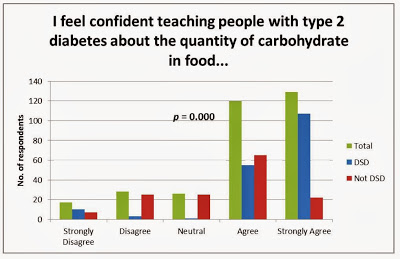
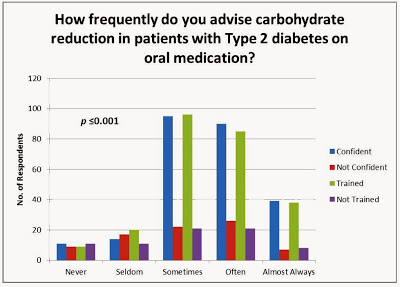
Diabetes care in the UK is abysmal for the majority of diabetics. The NHS audited annual statistics are grim, and they are grim year after year, no progress is being made, in fact the situation is getting worse. One of the keystones of good diabetes control is diet. And the experts on diet in the UK are the dietitians who are members of the British Dietetic Association. Recently they held a meeting and produced a survey conducted on some of their members opinions, some of the results you see below. As you can see their methods seem to be very unsound, in fact I don’t see any method at all. Clearly UK dietitians have no general guidelines or policy agreement to work to whatsoever. To the question How frequently do you advise carbohydrate restriction with type two diabetes on oral medication, sometimes was the answer for the most. The question what would be a realistic carbohydrate restriction in type two diabetes 30 to 50% of energy was the overwhelming reply.
The $64000 question is, how could any successful organisation operate with absolutely no overhaul common policy ? no corporate structure or method of operation whatsoever. Remember we are not talking about flogging nuts and bolts here, we are talking about the health of millions of people. Is it any wonder the UK diabetes statistics are so grim, when the very organisation that should be leading the way to better health for so many, could not run a whelk stall. Until the BDA at the very least, issue some basic guidelines to their members and have some sort of common policy, regarding carbohydrate control or restriction, the carnage will go on. It is my opinion, the BDA is at the very least partly responsible for the early death of countless diabetics. Will it be ever thus ?
Eddie


Unilever launches with Guardian Newspaper huge new Black OPs propaganda outfit. Junk food bullshit goes to a new high !

"Guardian News and Media (GNM) today officially launches Guardian Labs - its branded content and innovation agency - which offers brands bold and compelling new ways to tell their stories and engage with influential Guardian audiences.
The official launch of the new commercial proposition is marked by the announcement of a pioneering seven-figure partnership with Unilever, centred on the shared values of sustainable living and open storytelling.
Guardian Labs is built around the unique philosophy of Open Ideas that reflects the Open Journalism proposition of the Guardian as a whole. At its heart is a collaborative and participative approach to developing brand stories that resonate amongst the highly engaged communities across all the Guardian platforms.
Guardian Labs co-creates bespoke ideas, content and products with a 133-strong team, including creatives, strategists, designers, video and content specialists working with the Guardian's award-winning editorial, multi media, digital development and marketing divisions."
Just as Unilever and other major junk food makers start coming under the cosh, a new Black OPs propaganda outfit comes together. Their aim "shared values of sustainable living and open storytelling" I expect there will be one hell of a lot of "storytelling" The sort of story telling I call total bullshit. So, my old low carb and paleo friends, the big boys realise the gig is up, and are throwing huge sums of money into propaganda to keep the gravy trail going. A "133 strong team", a 1033 strong team will never convince me junk food is healthy and that a fresh whole foods approach is not the way to go. Problem for Unilever and the like is they don't do whole fresh foods. I'm gutted for them. Maybe they should concentrate on soap and washing powder.
Full story here.
Eddie

Monday, 24 February 2014

Phoenix the Screaming Lord Sutch of Diabetic Advice

This should be posted as supporting comment on Eddie’s post below. However, it contains a table which I don’t know if the comment section will accept. It’s an old post but illustrates the spurious nonsense spouted by Phoenix and her ilk.

The table below compares the vitamin, mineral content and other important dietary elements for broccoli and potato It can be seen that broccoli in 13 out of 18 of the important dietary elements has a greater or equal amount of the element. In those instances where potato has a greater or equal amount of the dietary element (vitamin B1, vitamin B6, potassium and selenium) the deficit in dietary element is easily made up with side-dishes made up of combinations of one or more of celery, courgette, radish, cauliflower, or mushroom.


Potato

Broccoli

Winner

Vitamin

A

0.00

80.00

+

B1

0.13

0.05

_

B2

0.02

0.05

+

B3

0.40

0.70

+

B5

0.38

N

_

B6

0.33

0.11

_

B12

0.00

0.00

Draw

Folic Acid

19.00

64.00

+

C

9.00

44.00

+

D

0.00

0.00

Draw

E

0.06

1.10

+

Mineral

Calcium

5.00

40.00

+

Iron

0.30

1.00

+

Magnesium

12.00

13.00

Draw

Potassium

250.00

179.00

_

Selenium

1.00

Tr

_

Zinc

0.10

0.40

+

Dietary Fibre

1.10

2.60

+

Broccoli contains almost 5 times as much vitamin C as potato
Broccoli contains 8 times as much calcium as potato
Broccoli contains almost 2.5 as much dietary fibre as potato


Of course broccoli does not constitute a meal but to see examples of low carb meals where broccoli or other low carb nutrient rich vegetables are used see Jan’s posts below or visit the website:


John

Oldest Holocaust survivor, Alice Herz-Sommer, dies at 110

The oldest known survivor of the Nazi Holocaust, Alice Herz-Sommer, has died in London at the age of 110.
Born into a Jewish family in Prague in 1903, Ms Herz-Sommer spent two years in a Nazi concentration camp in Terezin.
She was an accomplished pianist and music teacher and taught at the Jerusalem Conservatory until 1986, when she moved to London.
A film about her life has been nominated for best short documentary at next month's Academy Awards.
"We all came to believe that she would just never die," said Frederic Bohbot, producer of the documentary, The Lady in Number 6: Music Saved My Life.

Ms Herz-Sommer is said to have continued playing the works of Schubert and Beethoven until her final days.
On the film's website, she says: "I am Jewish, but Beethoven is my religion. I am no longer myself. The body cannot resist as it did in the past.
"I think I am in my last days but it does not really matter because I have had such a beautiful life.
"And life is beautiful, love is beautiful, nature and music are beautiful. Everything we experience is a gift, a present we should cherish and pass on to those we love."
What an amazing life this Lady lead. From living through unimaginable horror and suffering to playing her music until the end. How anyone came out of those camps sane and with the strength to start again and live a great life is awe inspiring. A born fighter and survivor. Good always overcomes evil, but what a price so many have paid.
More on this great story here.


Be sure to check out the film website here.

Eddie