Total Pageviews

Monday, 14 March 2022

Three Ways to Cook Your Vegetables so they are more healthy and anti-inflammatory


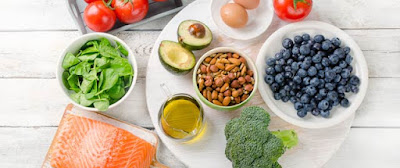
We're all about constantly striving to make our food even more healthy and while many vegetables are packed with inflammation-fighting vitamins and minerals on their own, here are a few easy tricks to take them to the next level. 

1. Toss them with spices and herbs.
Many of your favourite spices are not only adding flavour but also providing anti-inflammatory properties. While turmeric gets a lot of the spotlight (and rightfully so; a ton of studies have shown its anti-inflammatory effects), all spices and herbs contain unique, health-promoting qualities—and their flavours pair perfectly with so many vegetables. Toss your veggies with turmeric, cinnamon, or chopped rosemary with a generous pinch of fine-grain sea salt before roasting with a high-quality oil (see No. 3 for more on that). You can also use spices and herbs to turn a basic three-ingredient soup into something that tastes gourmet. Simply sauté a diced yellow onion in avocado oil or olive oil in a medium pot until translucent, then add a generous pinch of sea salt and peeled, chopped squash or root veggie of choice. Top with veggie broth and cook until the veggie is easily pierced by a fork, then blend with your spice of choice until smooth.

Moroccan seasonings like harissa play well with the sweet warmth of butternut squash while parsnips love cardamom, cinnamon, and star anise. Play around—you could have a different dinner with almost the exact same ingredients almost every night simply by changing the spice blend!

2. Deglaze with bone broth.
Bone broth is consistently cited by functional medicine experts as one of their top inflammation-fighting foods. "The glucosamine in bone broth can actually stimulate the growth of new collagen, repair damaged joints, and reduce pain and inflammation," explains Amy Myers, M.D. Take advantage of its healing powers by swapping it for stock or broth whenever a recipe calls for it. You can use it in stuffing, in soups, and to deglaze veggies. The best way to make sure you always have some on hand when you need it? Freeze it in an ice cube tray, then, when it's completely frozen, pop out the cubes and store them in a large, freezer-safe bag. You can pop out a few cubes if you need a cup or two of broth, or just use one at a time to add pops of flavour to stir-fries or add a savoury, umami-packed sheen to roasted veggies.

3. Lean into anti-inflammatory fats.
Start with your cooking oils: Toss your veggies with fats that have been found to have inflammation-fighting benefits like olive oil and avocado oil (bonus: They're both liquid at room temperature, which makes tossing them with cold veggies on a roasting pan much easier). Then, up the ante even more by mixing in more anti-inflammatory fats by incorporating nuts and seeds. Regular nut consumption has been found to lower a number of inflammatory markers, and they also add a satisfying toasty flavour and crunch to seasonal dishes. Top your roasted root veggies with a sprinkle of chopped toasted pecans, hazelnuts, or walnuts; mix pistachios into a butternut squash and dried cranberry salad; spoon a generous amount of nuts onto your favourite soup to add texture and interest. Inflammation-fighting and crave-worthy? Sounds like a perfect dish.
Above words and image from article here
h/t Marks Daily Apple here

Related Reads You May Find Interesting
What is inflammation, and why is it dangerous? - see here
Root Vegetables - So Healthy - see here
Hearty Root Vegetable Soup - Immune Boosting - see here
Prebiotic Roasted Tray Bake With Tahini Drizzle - see here


You will find a variety of articles and recipe ideas within this blog, and not all may be suitable for you. If you may have any food allergies, or underlying health issues these must always be taken into account. If you are a diabetic and not sure how certain foods may affect your blood sugars, test is best, i.e. use your meter.

All the best Jan 

Sunday, 13 March 2022

Oatmeal - Can it be eaten on a low carb / keto diet ?

Do you like oatmeal? I know many people do, but when you live a low carb or keto lifestyle it doesn't really fit in! So what do you do? Well, you simply find alternatives/substitutes which are lower in carbs.

Let's just re-cap on what is low carb …
Low carb (ketogenic) 0-50g carbohydrate per day

Typical low carb 50-90g (this is what Eddie and I do, typically around 50g per day)

Liberal low carb 90-130g

Moderate carb 130-170g

High carb 170g and more

For comparison, a regular Western diet can easily contain 250 grams of carbs or more in a day, most of them refined carbs, including sugar.

Now, back to oats! While oats may come packed with key vitamins and minerals, the carb count is simply too high for those following a low-carb or ketogenic diet. Even if you were to split the serving size in half and only consume 50 grams of oats in a sitting, it would still make up about 28 grams of carbs. Remaining below a certain carb intake is key in a low carb or keto diet.

This change in diet may be a bit overwhelming at first, which is why it’s recommended to find low-carb substitutes for all of your favourite high-carb foods to make the transition easier. Fortunately, there are several low-carb oatmeal alternatives you can enjoy.

1. Chia Seed Oatmeal
2. Flaxseed Oatmeal
3. Hemp Heart Seeds
4. Coconut Flakes


Read more about oatmeal, and see the alternative recipes here
Read more about low carb here and here

You may also be interested in reading:
Introduction to Low Carb for beginners, find it here
Just Swap - Doesn't It Make Sense ? - find it here

Dear reader, this blog is presented in a magazine style - we hope something for everyone. You will find a variety of articles, studies, thoughts, photographs, music and recipes! However, not all the recipes ideas featured in this blog may be suitable for you. If you may have any food allergies, or underlying health issues these must always be taken into account. If you are a diabetic and not sure how certain foods may affect your blood sugars, test is best, i.e. use your meter.

All the best Jan

Saturday, 12 March 2022

Tulips : A popular flower, but did you know ?


Tulips are part of the Lilly family, these interesting little flowers symbolize Spring and the coming summer – but also hold many different meanings for their different colours.

Although wholly synonymous with the Netherlands, they are not native to Eastern Europe – having been first imported from the Middle East and cultivated by Flemish botanist Carolus Clusius at the Dutch Leiden University’s botanical gardens.

But did you know that tulips are edible? Or that they are the National Flower of Turkey and Afghanistan?

Or what about the fact that tulips helped save the Netherlands from starving in WWII?

Read on for five fun facts about tulips (and if you know any more do please share them in the comments)

1. Tulips ARE NOT from the Netherlands.
Despite being the National Flower of the Netherlands, the tulip is not native to the Netherlands. The tulip bloomed natively in a big swathe of land that covered Southern Europe to Central Asia, but was introduced into eastern Europe in the form of imports from what is now known as Turkey.

The tulip became a coveted prize within the Netherlands, as it was far more vibrant and lush in colour than the flowers native to this part of the world.

Tulips became a status symbol to the Dutch and contributed to one of the world’s first financial economic bubbles known as “Tulipmania” where they were so valuable, they could be used to buy a house!

To this day, the Netherlands is still the world’s foremost producer of tulips, producing 3 billion bulbs yearly, most of which are exported worldwide.

2. The word “tulip” is derived from the word “turban.”
In the Middle East, the tulip was referred to as a “dulband.” the Persian word for “turban,” because of the way the flower’s head sat atop its stalk, resembling a turban upon a person’s head.

However, this might be a falsehood, as during this time it was fashionable to wear tulips in one’s turban – so nobody really knows whether this is why they are named after turbans or if it because of their shape!

“Dulband” in Persian became “Tülbent” in Turkish, which in turn evolved to “Tulipán” in Danish – all of which meant “turban” – to later becoming “Tulipe” in French, which just meant “Tulip.”

And that’s where the word “tulip” comes from!

3. There are more than 3,000 different varieties of tulip!
This is something that won’t come as a surprise to anyone who has ever taken a walk down Amsterdam’s famous floating flower market!

With 75 wild tulip species and over 150 different species altogether, it’s not surprising that there are so many different variations. There are even tulips that bloom with up to four different flower heads atop just one stem! Some of the most striking tulips are those with streaks of different colours in their petals.

These tulips were originally cultivated by Flemish botanist Carolus Clusius, father of the Dutch obsession with tulips, in the Netherlands in the 1600’s.

He noticed that some of the tulips he was cultivating had a viral infection, which he called “broken tulips”, that caused the petals to show beautiful and striking streaks of colour in them.

After noticing this, Clusius was able to carefully spread this infection among his tulips in order to create many new colour variations.

4. The different colours of tulips hold different meanings.
This might seem a bit obvious, but with over 3,000 different variations then that must mean there are a lot of different meanings for all those different tulips, right?

Red tulips represent true love – symbolizing passion and romance, and typically these would make a gift for a romantic partner.

Yellow tulips represent hope and cheerful thoughts and typically would be something you’d give somebody as a caring get-well gift.

White tulips are used as a flower to make an apology with.

Purple tulips symbolize that somebody is your everything – your Qweeeeen. Purple has long been a colour associated with royalty, so by giving your love some purple tulips you’re saying that, to you, they are royalty.

5. Tulips are edible.
Well, the petals can be readily eaten and the bulbs can be eaten if prepared correctly.

This was something the Dutch learned during the Hunger Winter famine of 1944. After a strike by Dutch rail workers, the Nazis stopped all imported food from entering the Netherlands, causing a winter-long famine that was directly responsible for the deaths of 22,000 Dutch people and indirectly responsible for countless deaths on top of that.

Due to a lack of manpower earlier that year, most of the Netherlands’s tulip bulbs hadn’t been planted, so the Dutch government’s Office of Food Supply published a guide on how to properly prepare the bulbs as well as suggested recipes for them.

There was one a recipe for bread* made from crushed up tulip bulb, flower, salt and water, which one child described as tasting like sawdust – but even that was better than nothing! The famine ended in 1945, when Sweden exported large amounts of flour and other goods to the Netherlands and the Nazis allowed them into the country. Once again, the tulip had played a significant role in Dutch history.
Words and picture above from article here


Related Post
Tulips : How To Make Them Last Longer - see here

Bread*
These two recipe suggestions are not made using crushed up tulip bulbs!
The first suggestion uses coconut flour and the second one almond flour, both are low carb.
Coconut Flour Bread, it's Low Carb, Keto, Paleo - more details here
Almond Flour Bread, it's Low Carb, Gluten Free, Grain Free - more details here

You will find a variety of articles and recipe ideas within this blog, and not all may be suitable for you. If you may have any food allergies, or underlying health issues these must always be taken into account. If you are a diabetic and not sure how certain foods may affect your blood sugars, test is best, i.e. use your meter.

Wishing all readers a happy weekend.

All the best Jan

Friday, 11 March 2022

Niçoise frittata, it looks so colourful and tastes delicious


Why not channel the flavours of a classic tuna Niçoise salad with this easy frittata recipe ... don't those vegetables look colourful! Top the frittata with a quick zesty tomato and olive salsa, finished with basil leaves ... delicious 😋 

Ingredients
Serves Four
175g frozen green beans
100g spinach
8 eggs
2½ tbsp olive oil
145g tin tuna chunks in brine, drained
½ x 567g tin new potatoes, drained and halved
250g cherry tomatoes, halved
80g pitted black olives, drained and sliced
½ red onion, very finely sliced
½ tsp caster sugar
½ lemon, zested and juiced
8g fresh basil (leaves torn)
Method
1. Cook the beans in a pan of boiling water for 3 mins. Remove with a slotted spoon, rinse under cold water and pat dry. Add the spinach to the boiling water and cook for 30 secs until wilted. Drain, rinse under cold water, then squeeze out the excess water and finely chop.
2. Crack the eggs into a jug, season well and whisk lightly to combine.
3. Preheat the grill to high. In a 24cm non-stick, ovenproof frying pan, heat 1½tbsp oil over a low-medium heat. Pour in the egg, scatter over the beans, spinach, tuna and potatoes, and half the tomatoes, olives and red onion. Cook for 15 mins until the edges and base are almost set, then transfer to the grill for 5-6 mins until the top is set and golden. Leave to rest in the pan for 5 mins.
4. Whisk the remaining oil in a bowl with the sugar, lemon zest and juice. Add the remaining tomatoes, olives and onion. Tear over the basil leaves, season with pepper and toss to combine. Slide the frittata onto a board, spoon over the tomato and olive salsa and slice into wedges to serve.
Each serving contains
Carbohydrate 12.8g Protein 24.1g Fibre 4.6g Fat 24g
From recipe idea here

~ enjoy your day ~

As regular readers know, this blog brings a variety of recipe ideas, and it is always important to note, that not all may be suitable for you. If you may have any food allergies, or underlying health issues these must always be taken into account, and if you are a diabetic and not sure how certain foods may affect your blood sugars, then test is best, i.e. use your meter.

Many diabetics, and those who live the LCHF or Keto lifestyle, do not include potatoes in their menu plans and this recipe suggestion does include them. Always remember that recipes can be amended slightly to suit your needs and adjust the carbs or nutrition requirements accordingly. If you would like a lower carb alternative to potatoes you will find some suggestions here

Bon Appetit

All the best Jan 

Thursday, 10 March 2022

'How well does your fat function? It isn't a question that one gets asked very often'

An interesting study seen in Science Daily that Well-functioning fat may be the key to fewer old-age ailments ...

Fat tissue plays an important role in human health. However, our fat tissue loses function as we age, which can lead to type 2 diabetes, obesity, cancer and other ailments. High levels of lifelong exercise seem to counteract this deterioration. This, according to research at the University of Copenhagen, where biologists studied the link between aging, exercise and fat tissue function in Danish men.

How well does your fat function? It isn't a question that one gets asked very often. Nonetheless, research in recent years suggests that the function of our fat tissue, or adipose tissue, is central to why our bodies decay with age, and strongly linked to human diseases like diabetes 2, cancer as obesity often develop and fat cells undergo functional changes as we get older. Thus, overall health is not just influenced by the amount of fat we bear, but about how well our fat tissue functions.

A new University of Copenhagen study demonstrates that even though our fatty tissue loses important function with age, a high volume of exercise can have a significant impact for the better.

"Overall health is closely linked with how well our fat tissue functions. In the past, we regarded fat as an energy depot. In fact, fat is an organ that interacts with other organs and can optimize metabolic function. Among other things, fat tissue releases substances that affect muscle and brain metabolism when we feel hungry and much more. So, it's important that fat tissue works the way it should," explains Assistant Professor Anders Gudiksen of the University of Copenhagen's Department of Biology.

Fat cell function worsens with age
Gudiksen and a group of colleagues looked at the role of age and physical training in maintaining fat tissue function. Specifically, they studied mitochondria, the tiny power plants within fat cells. Mitochondria convert calories from food to supply cells with energy. To maintain the life processes within cells, they need to function optimally.

The researchers compared mitochondrial performance across a range of young and older untrained, moderately trained and highly exercise trained Danish men. The results demonstrate that the ability of mitochondria to respire -- i.e., produce energy -- decreases with age, regardless of how much a person exercises. However, Anders Gudiksen explains:

"Although mitochondrial function decreases with age, we can see that a high level of lifelong exercise exerts a powerful compensatory effect. In the group of well-trained older men, fat cells are able to respire more than twice as much as in untrained older men."
The above and more to read can be seen here

Although this study focused on men, would it be different for women? I think most readers would agree that exercise is important no matter our age or gender. How you exercise is a personal choice and any health concerns must always be taken into account, just remember, any movement is good 😊

You may also find these an interesting read:
'Exercise for Better Health' - see here
'The Functions of Fat' - see here

A variety of articles, studies and recipe ideas are found within this blog. Please note, not all may be suitable for you. If you may have any food allergies, or underlying health issues these must always be taken into account. If you are a diabetic and not sure how certain foods may affect your blood sugars, test is best, i.e. use your meter.

All the best Jan

Wednesday, 9 March 2022

Gratins : Six Lower Carb Choices

Gratins taste so good and work well as a side dish or main course.
Below you will find six recipe choices, I hope you may like to try one or all of them 😋


Turnip Gratin
more details here


Celeriac and Walnut Gratin
more details here


Celeriac Gratin
more details here


Cauliflower, Leek and Cheese Gratin
more details here


Cauliflower, Leek and Broccoli Cheese Gratin
more details here


Courgette / Zucchini Gratin
more details here

Have you a favourite one here?
Perhaps you have your own recipe - why not share it in the comments below.

You will find a variety of recipe ideas within this blog, and not all may be suitable for you. If you may have any food allergies, or underlying health issues these must always be taken into account. If you are a diabetic and not sure how certain foods may affect your blood sugars, test is best, i.e. use your meter.

All the best Jan

Tuesday, 8 March 2022

Meet Jesse the African Grey Parrot who is feeling happier now !


From time to time we post something completely different, and this story is a little different! Some readers may have already seen this story about a parrot who was so depressed and refused to talk after the death of his owner but has now found his voice again - including a bit of swearing. 😲

African grey parrot Jesse was taken in by an Animal Centre, near Ringwood, (a market town in south-west Hampshire, England), but it soon became clear to staff that he was struggling with grief and the sudden change in his environment.

Parrots - who learn to speak by hearing words and mimicking them - often have large vocabularies. But nine-year-old Jesse refused to speak, except for occasionally whispering ‘goodbye’ to RSPCA staff, and started to pluck out his own feathers.

Behaviour and welfare advisor Hannah Hawkins said: “He’d come into us after the death of his owner and we believe he’d been in the same home for his whole life and was much-loved so it’s not surprising he was struggling after such a sudden change. He seemed lonely and depressed after such a loss.”

Jesse got lots of attention and additional enrichment to help him while a new home was found for him.

Jesse went off to his new home in South Wales last month and is settling in well with dog behaviourist Rachel Leather, her family, and their two dogs and five cats.

As his confidence has grown the parrot has become much more cheeky, and potty-mouthed. He even loves to make fart noises.

Rachel from Aberdare said: “Within 24 hours of being home he was nattering away to himself.

“His personality is really coming out. He just makes us roar with laughter. He loves to make fart noises, make jokes and swear. His language is awful.

“I think he’s lived with a dog called Wellard in his previous home, or watched a lot of EastEnders, because he calls both of my dogs Wellard! He also says: ‘Jesse’s a good boy’ and then occasionally replaces that with: ‘Jesse’s a good girl’ and laughs.”

“He’s only been with us for a short time but I can’t imagine how we ever existed without him.

“He has settled in so well. Feather-plucking can be a difficult habit to break but he has some feather re-growth so that’s a good sign. He’s also started to play with his toys, interact with his foraging wall, and is even grinding his beak which is a signal of relaxation and contentment," added Rachel.

“The fact that he’s talking is a really good sign. I was surprised at how chatty he became because the staff at the centre said he was really quiet and had only said one word - ‘goodbye’ - a few times. It’s heart-breaking to think that’s all he’d say after suffering such loss.”

The cheeky parrot has also learned that Rachel’s partner calls her ‘Babe’ so shouts ‘Babe’ to get her attention and swears.

“I cannot wait to watch him grow in confidence and personality, and develop as he settles in more. We absolutely love him and it’s going to be a wonderful adventure with him joining the family."
Above words and picture taken from article here

Have you ever owned a parrot? Did he/she like talking?
As a child I can remember we had budgerigars, but they didn't talk!

All the best Jan 

Sunday, 6 March 2022

Turnip and its health benefits - when was the last time you ate one?


When was the last time you ate a turnip? In comparison to its cousins -- kale, cauliflower, arugula/rocket, and cabbage -- the turnip isn't a regular on most menus. But it's got a health profile that makes it worth checking out.

Turnips are among the oldest and hardiest vegetables. They grew wild in Siberia when dinosaurs roamed the earth and got an early reputation as a food for poor people and farm animals.

Today, many people wouldn't know a turnip if they saw or tasted one. People mistake it most often for the rutabaga/swede, which is a cross between a turnip and cabbage.

So here's more about turnip:
It's a root vegetable in the Brassicacae family of mustard plants. It's ready for harvest in the spring and fall/Autumn. The most common turnip is light purple on top and white on the bottom, but there are more than 30 kinds with varying shapes and colours. Some are sweet, like a carrot, while others taste more like a potato.

Unlike most other vegetables, you can eat both the turnip's root and the leafy greens attached to the top. They're both good for you.

Nutrients per Serving
1 medium turnip has:
Calories: 34  Fat: 0.1 gram  Carbs: 7 grams  Protein: 1 gram
Fibre: 2 grams  Sugar: 4 grams  Cholesterol: 0 grams
Turnips are full of vitamins and minerals like:
Calcium  Folate  Magnesium
Phosphorus  Potassium  Vitamin C 
Turnip greens, also called turnip leaves or tops:
have vitamins A, C and K. 

Health Benefits
One medium turnip has 233 mg of potassium. Your body needs that mineral for just about everything, including helping your nerves send signals and keeping your muscles and heart in good working shape. When you don't get enough, you're at risk for high blood pressure, stroke, kidney stones, brittle bones, and high blood sugar.

Turnips have plenty of other benefits, too.
Cancer prevention. Turnips have glucosinolates -- plant-based chemicals that may help prevent all kinds of cancer, from breast to prostate.

Eye health. Turnips are rich in the antioxidant lutein. This keeps your eyes healthy and wards off problems like macular degeneration and cataracts.

Bone health. Dairy isn't the only way to build strong bones and stay one step ahead of the bone-weakening disease osteoporosis. Turnips have a significant amount of calcium, which also helps your heart, muscles, and nerves.

Risks and Warnings
Some health problems and medications don't mix well with turnips. Talk to your doctor if:

You need a faecal occult blood test. Turnips, broccoli, and some other fruits and vegetables may give you a false positive or false negative on this test, which looks for hidden blood in your stool.

Your blood clots too quickly. If you have certain conditions, too many turnip greens -- which are high in vitamin K -- can cause your blood to clot faster than normal.

You have a kidney condition. Your kidneys remove extra potassium from your body. If they don't work well, you may have too much potassium in your system. This causes a rapid heartbeat and muscle issues like weakness, cramps, or stiffness.

How to Prepare Turnips
A good turnip is a small turnip. The big ones tend to be bitter. Look for turnips that feel firm and don't have any spots. 

At home, cut off the root and base of the leaves. Don't wash it until you're ready to eat. They'll keep in the refrigerator for up to a week. 

Peel the skin unless it's a baby turnip.

Raw or cooked, turnips are incredibly versatile:
Boil or steam turnips and add them to mashed potatoes for extra vitamins and minerals.
Grate them raw into salads or slaws.
Roast them with other root vegetables like carrots and sweet potatoes, and bring out their natural sweetness.
Swap turnip greens for spinach or collards and sauté them with garlic, olive oil, and lemon.
Pickle turnips and their greens to get gut-friendly probiotics.
You can see the above article with all relevant links here

The above is provided for general information only, and should not be treated as a substitute for the medical advice of your own doctor or any other health care professional. If you have any concerns about your general health, you should contact your local health care provider.


you may like to try this recipe, only 6.2g carbs per serving
Cauliflower, Swede & Turnip Curry
more details here

Dear reader, you will find a variety of articles and recipe ideas are within this blog. Please note, not all may be suitable for you. If you may have any food allergies, or underlying health issues these must always be taken into account. If you are a diabetic and not sure how certain foods may affect your blood sugars, test is best, i.e. use your meter.

All the best Jan

Happy Sunday


Wishing all readers a Happy Sunday
Hoping you find time to relax and enjoy your day.

All the best Jan

Saturday, 5 March 2022

Spicy Pork Lettuce Wraps : Make A Tasty Bite


The years pass so quickly don't they. It was in 2015 that I first saw this recipe, so time to highlight it again. Yes, these low-carb, oriental-style spicy pork wraps are good for us low carbers, paleo and gluten-free people. The addictively spicy, crunchy mouthfuls, taste good. You can use other vegetables instead of the red pepper if you prefer, maybe sliced celery, or spiralised courgettes/zucchini.

If you are 'paleo' I believe fish sauce is allowed - as long as it contains only fish and salt, so check the label – as some brands have other additives.

Ingredients
Serves Two
1tbsp olive oil
2 cloves garlic
a thumb of fresh ginger
4 spring onions/scallions, sliced (both green and white parts)
1 red pepper, sliced
250g (free range) pork mince
1tbsp fish sauce
juice of a lime
2 shredded lime leaves or some lime zest
30g mint, half the leaves roughly chopped
30g coriander, half the leaves roughly chopped
2 little gem lettuces, leaves separated

Method
1. Heat the olive oil in a large frying pan and grate in the ginger and garlic. Add the spring onions and red pepper and cook for a couple of minutes.
2. Tip in the mince, fish sauce, lime juice, lime leaves or zest and the chopped mint and coriander.
3. Cook, stirring, until the meat is done.
4. To eat, spoon the spicy mince into lettuce leaves, adding a sprig or two of mint and coriander. Wrap into a bundle and eat straightaway.

Now ... don't you think that makes for a tasty bite!
From original recipe idea here

It is interesting to note that more and more people are now using the low carb vegetable alternatives, rather than the higher carb foods, such as pasta and rice. Many supermarkets are offering ready prepared lower carb alternatives such as zoodles and cauliflower rice. These lower carb alternatives do not cause the blood sugar spikes, especially important if you are a diabetic ... but increasingly those who are looking for a healthier lifestyle such as LCHF (low carb high fat) find the swap you make so worthwhile to your general health and well-being. Lettuce leaves can make a great swap from taco's, see more here

Please note, not all the recipes ideas featured in this blog may be suitable for you. If you may have any food allergies, or underlying health issues these must always be taken into account.


All the best Jan

Friday, 4 March 2022

It's the 4th today, let's look at the number four, plus four ways with cauliflower mash !

It's Friday the 4th of March, so for something a little different I thought why not take a look at the number four. Here are ten random facts about the number 4. Of course if you know of any others do please share them in the comments 😊

image from google

1.The word in English for the number four is one of a kind, as it’s the only number that has the same number of letters as the value of the number itself!

2. The number four is the smallest composite number. A composite number is a positive number that is the result of multiplying two numbers that are lower than themselves. In this case, two times two gives us the number four.

3. It’s commonly believed that there are at least four dimensions. The first three are length, width, and depth, which make up physical objects. The fourth dimension, at least according to scientists, is commonly notated as time. If you hold an apple in your hand, that apple has length, width, and depth, which can easily be seen and measured. The apple’s fourth dimension is the time at which you are looking at it.

4. US President Franklin D. Roosevelt believed that everyone in the world should at least have four basic freedoms. In no particular order, these are Freedom from Want, Freedom of Speech, Freedom from Fear, and Freedom of Religion.

5. These days computers can store so much information that they work with gigabytes and terabytes of information. At the end of the day, though, computers still deal with millions of tiny amounts of data all the time. The most basic unit of information is known as a bit. Eight bits are known as a byte. Some practical joker was obviously involved in the naming of four bits (half a byte), as it’s known as a nibble!

6. The chemical element beryllium has the atomic number four. On the periodic table, it joins the other alkaline earth metals in group 2. A rare element, beryllium is a common component in the aerospace industry as it holds its shape in a wide range of temperatures and is incredibly lightweight!

7. Some of the most common engines used today are known as four-stroke engines. In each of the engine’s cylinders, the piston has to move up or down four times, an action known as a stroke. The first stroke sucks the fuel into the cylinder, the second compresses the fuel, on the third stroke, the compressed fuel is ignited, and finally, the fourth stroke expels the exhaust. This is the process that creates mechanical energy that makes your car move!

8. The number four is present everywhere in baseball. To start with, there are four bases in the game. If the pitcher makes four mistakes in a row while throwing the ball, known as “balls,” then the batter gets to walk to the first base without actually hitting any balls. Finally, the most number of runs that a batter can score from one hit is four, which is most commonly known as a grand slam. This is possible when all the bases are loaded up with previous batters, and they all make it back to base in one hit.

9. The number four is considered unlucky in many Asian cultures, including China, Japan, and Korea. This is because the number four, sì, sounds very similar to the word for death, sǐ. Because of this, many buildings in Eastern Asia skip the fourth floor entirely and go from second to fifth!

10. If you look at any decent map of the world, you will notice that each country will be shaded in one of a select number of colours. If you look at any country, in particular, you’ll notice that the neighbouring countries are all coloured differently to make it easier to differentiate between them. Back in 1852, a man called Francis Guthrie discovered that the smallest total number of colours required to implement this is just four!

The number four is literally wherever you look, and this makes sense, as it’s one of the lowest numbers!
The words above taken from article here

To end this post I have kept with the theme of number four and show four ways you can jazz up your low-carb mashed cauliflower by choosing curried, buttery, mustard and cheesy. See how you can flavour individual portions easily and keep the entire family and any picky eaters happy 😋 More details here


Cauliflower is an extremely healthy vegetable. It is very low in calories yet high in vitamins, and can provide some powerful health benefits, and is a great source of nutrients. In fact, cauliflower contains some of almost every vitamin and mineral that you need, including a few that many people need more of. Additionally cauliflower contains unique antioxidants that may reduce inflammation and protect against several diseases, such as cancer and heart disease. What’s more, cauliflower is easy to add to your diet. It’s tasty, easy to prepare and can replace high-carb foods in several recipes.

Dear reader, you will find a variety of articles and recipe ideas within this blog. Please note, not all may be suitable for you. If you may have any food allergies, or underlying health issues these must always be taken into account. If you are a diabetic and not sure how certain foods may affect your blood sugars, test is best, i.e. use your meter.

All the best Jan

Thursday, 3 March 2022

'Fake plant milks: three times as expensive as dairy with fewer nutrients.'

 "A comparative assessment of the nutritional composition of dairy and plant-based dairy alternatives available for sale in the UK and the implications for consumers’ dietary intakes

image from google

Highlights
Plant-based dairy alternatives (PBDA) cost three times more than dairy products.

There were significant differences between milk, yogurt and cheese and PBDA for many nutrients.

PBDA can have significant consequences for nutrient intakes when replaced with dairy

Fortification provides a potential route for improving the nutritional composition of PBDA.

At present, PBDA can be considered a practical but not nutritional replacement for dairy products.

Abstract
The popularity of plant-based dairy alternatives (PBDAs) products has grown exponentially in recent years creating a new market of PBDA. The aim of this study was to compare the nutritional content of plant-based alternatives of milk, yogurt and cheese with dairy equivalents and the impact on nutritional intake across the lifespan when they are substituted into UK diets. Nutritional information from cow’s milk, yogurt, cheese and PBDAs available on the UK market was collected via manufacturers information. The products were categorised according to primary plant-based ingredient/s and compared with the equivalent dairy product. The National Diet and Nutrition Survey data was used to calculate the intake of milk, yogurt and cheese across all age groups and the energy and nutrient intake was calculated. Plant-based milk, cheese and yogurt alternative categories were then substituted for dairy intakes, and energy and nutrient intakes were calculated and compared to UK Dietary Reference Values. 

A total of 299 PBDA products were identified consisting of 136 milk alternatives, 55 yogurt alternatives and 109 cheese alternatives. All PBDAs were more expensive than dairy products. Milk contained more energy, saturated fat, carbohydrates, protein, vitamin B2, vitamin B12 and iodine, and less fibre and free sugars, than plant-based milk alternatives (P < 0.05). There were significant differences between yogurt and cheese and their corresponding PBDAs for energy, fat, saturated fat, carbohydrate, sugars, fibre protein, salt, and calcium (P < 0.05). These differences were reflected in the nutrient intakes of different age groups and the results demonstrated that PBDA may be useful as practical replacements of dairy products but cannot be considered nutritional replacements."

It makes sense to ensure that whatever diet/lifestyle we choose care should always be taken to make sure we are getting adequate nutrition.

Above words and more can be seen at Science Direct here
h/t Marks Daily Apple here

~ xx ~~ xx ~


Please note, there is a variety of articles, studies, recipe suggestions and more within this blog, and not all may be suitable for you. If you may have any food allergies, or underlying health issues these must always be taken into account. If you are a diabetic and not sure how certain foods may affect your blood sugars, test is best, i.e. use your meter.

All the best Jan

Wednesday, 2 March 2022

Answers to March Quiz Plus ... a recipe for meatball, lentil and cabbage hotpot

Hello there, I hope you enjoyed yesterdays quiz. Many thanks to all those who read the post and special thanks to those who took time to comment.


Did you know the answers? Well, as promised here are the answers to the seven questions. For ease I have repeated the questions ...

1. What is the birth flower of March?
Daffodil

2. Symbolizing courage, name March's birthstone?
Aquamarine or bloodstone

3. What's the zodiac signs for early March until March 20? And what about the sign for the latter part of March?
Pisces (until March 20) and Aries (March 21 onwards)

4. 'Dear March - Come in', was a poem by which reclusive 19th Century American poet?
Emily Dickinson

5. On what date in March is Saint Patrick's Day?
17th March

6. Complete the saying: 'March comes in like a lion and goes out like a ....'?
Lamb

7. The lives of the four March sisters feature in which famous novel?
Little Women (Louisa May Alcott)

How did you do? Before I researched the answers I knew four 😊

... and now on to a tasty recipe suggestion, which you may wish to try.

Meatball, Lentil and Cabbage Hotpot
A Comforting and Tasty Dish


Ingredients
Serves Four
1 tbsp oil
560 g ready-made beef meatballs with tomato sauce and Parmesan
1 onion, finely chopped
1 garlic clove, crushed
1 tsp smoked paprika, plus an extra pinch to garnish
390 g carton chopped tomatoes with basil and oregano
500 ml beef stock
120 g dried green lentils
14 g fresh flat-leaf parsley, chopped, plus extra to garnish
0.25 Savoy cabbage, shredded
1 courgette (zucchini), trimmed, halved horizontally, and cut into crescents
4 tsp 50% (less fat) crème fraîche
Instructions
more details can be seen here

A variety of articles and recipe ideas are within this blog, and not all may be suitable for you. If you may have any food allergies, or underlying health issues please take these into account. If you are a diabetic and not sure how certain foods may affect your blood sugars, test is best, i.e. use your meter.

All the best Jan

Tuesday, 1 March 2022

March - Time for the first of the month quiz and it's Pancake Day 2022 - Enjoy some low carb ones


As we welcome March, the third month of the year, it's time for the first of the month quiz. I'm only asking seven questions, I hope you may have a go at answering them.

1. What is the birth flower of March?

2. Symbolizing courage, name March's birthstone?

3. What's the zodiac signs for early March until March 20? And what about the sign for the latter part of March?

4. 'Dear March - Come in', was a poem by which reclusive 19th Century American poet?

5. On what date in March is Saint Patrick's Day?

6. Complete the saying: 'March comes in like a lion and goes out like a ....'?

7. The lives of the four March sisters feature in which famous novel?

How did you do? Please come back tomorrow when the answers will be revealed. 😊

Yes today, March 1st 2022, is Pancake Day! Will you be enjoying some? Will you be flipping some? Now that can be fun - but have you the skill? Eddie and I may well be enjoying some low carb pancakes (see recipe below). We particularly like them with some low carb fruits, but dear reader you choose your accompaniment.


These crepes/pancakes are virtually carb. free and are very easy to make.
Although you use ricotta cheese they do not taste of cheese.


Low Carb Crepes / Pancakes Recipe
Ingredients
makes between 6 and 8 crepes/pancakes
200 Grams of ricotta cheese
3 eggs
I teaspoon of cinnamon
A splash of milk

Method
1. Mix the cheese, eggs and cinnamon into a small mixing bowl, add a splash of milk if the mix is too thick to run freely.
2. Place a small knob of butter into a frying pan, I use a small omelette pan 8".
3. Heat the butter and spoon in 3 table spoons of mix. Fry until firm then turn over and cook for one minute or until the crepe is starting to brown.
4. Allow to cool and fill with cream cheese and finely chopped spring onions or smoked salmon and asparagus tips, whatever you like. Roll up the crepe and enjoy.
5. Great at any time and very good for the lunch box or picnics.
6. Also great warm with some low carb berries and double cream.
7. Or why not serve with a slice of lemon - gently squeezed over the crepes.


~ have a lovely day ~

Dear reader, this blog is presented in a magazine style - we hope something for everyone. You will find a variety of articles, studies, thoughts, photographs, music and recipes! However, not all the recipes ideas featured in this blog may be suitable for you. If you may have any food allergies, or underlying health issues these must always be taken into account. If you are a diabetic and not sure how certain foods may affect your blood sugars, test is best, i.e. use your meter.

All the best Jan

Sunday, 27 February 2022

'Ketogenic diet as a metabolic treatment for mental illness'


"Ketogenic diets may be used to treat mental illness in the future

Adapted from Ketogenic diet as a metabolic treatment for mental illness by Nicholas G. Norwitz, Shebani Sethi Dalai, and Christopher M. Palmer.

Ketogenic diets have been used to treat drug resistant epilepsy in children for over one hundred years.

Now they are being used for other neurological conditions such as schizophrenia, depression, bipolar disorder and binge eating disorder.

There is strong evidence that common biological pathologies underlie these conditions such as abnormal glucose metabolism, neurotransmitter imbalances, oxidative stress and inflammation. These factors are all improved with a ketogenic diet.

Controlled clinical trials have shown improvement in:
Obesity, Type Two Diabetes, Multiple Sclerosis, Epilepsy, Alzheimer’s disease and Autistic Spectrum Disorder.

Uncontrolled clinical trials have shown improvement in:
Parkinson’s disease and Schizophrenia.

Case series and animal models have shown improvement in: Cardiovascular Disease, Binge eating disorder, Major Depressive disorder, Bipolar disorder and ADHD.

It is estimated that people who have mental illness live around 7 to 10 years less than those who do not have a mental illness. Sometimes this is due to suicide, but more often it is due to concurrent diabetes, heart disease, respiratory disease, infectious disease and cancer. All of these conditions are raised in people with mental illness. Sometimes this is due to poor health behaviours such as smoking or other lifestyle issues, and drug side effects can also cause problems. But even in people of a healthy weight and who are not on drugs, if they have mental illness, they are also more likely to have physical illness. Could switching the body and brain away from glucose use towards fat and ketone use improve matters?

Cerebral glucose hypometabolism and insulin resistance are features of Alzheimer’s disease, Parkinson’s disease, Schizophrenia, and Epilepsy. In one recent Cochrane review of epilepsy, as many as 55% of patients had complete remission of their fits on a ketogenic diet.

GABA/glutamate imbalance is a feature of Epilepsy and Schizophrenia. Oxidative stress is a feature of Schizophrenia, Bipolar disorder and Major Depressive Disorder. Oxidative stress and inflammation are mutually reinforcing processes. Major Depressive Disorder, Schizophrenia have these issues.

The Virta Health Group has demonstrated that a ketogenic diet is a well tolerated and effective strategy for treating type two diabetes. It reversed the condition in 54% of patients compared to 5% who received standard care. Alzheimer’s patients also improved on a ketogenic diet and also benefitted from medium chain triglyceride supplementation. (MCTs). Parkinson’s disease, Huntington’s disease and Multiple Sclerosis patients also showed improvement in studies. About 50 to 80% of patients with Alzheimer’s disease have cross over symptoms with schizophrenia, Bipolar disorder and major depressive disorder. These conditions all share common metabolic abnormalities.

It is thought that the ketogenic diet affects the gut microbiome and gut issues are thought to influence Autistic Spectrum Disorder. Two clinical trials reported sometimes complete symptom remission in patients with Childhood Autism when treated with a ketogenic diet.

Some case studies involve psychiatric patients who embarked on ketogenic diets for weight loss and gut problems, only to find a massive improvement in their mental conditions as well. Dr Christopher Palmer reported about an elderly woman with over 50 years of schizophrenia who was able to stop all her antipsychotic medication and has been symptom free for over 12 years. Another middle aged woman who had schizophrenia and depression went into complete remission and was able to get her degree and a full time job in the last four years. Both remain unmedicated and on their ketogenic diets.

Results with Binge eating disorder have also been impressive. These patients are usually on 20-30g of carbohydrate a day."

Words above taken from Diabetes Diet Blog here 
Full study can be read at Dr. P
erlmutter site here


As regular readers know, this blog is presented in a magazine style - we hope something for everyone. You will find a variety of articles, studies, thoughts, photographs, music and recipes!

However, not all the recipes ideas featured in this blog may be suitable for you. If you may have any food allergies, or underlying health issues these must always be taken into account. If you are a diabetic and not sure how certain foods may affect your blood sugars, test is best, i.e. use your meter.

All the best Jan

Saturday, 26 February 2022

The storms continued and many trees were blown down, but 'rare and ancient trees are key to a healthy forest'

You may have read my recent posts about the many storms the UK and other countries have been experiencing. The winds were certainly very strong and a lot of trees were blown over/knocked down. In many areas of the UK the clear up is still continuing as more rain and strong winds have again caused problems. It is my hope that the trees will be replaced because as Elizabeth Pennisi writes:
"Rare and ancient trees are key to a healthy forest.

image from google

About 800 years ago, a giant oak tree in England’s Sherwood Forest helped shelter Robin Hood from the corrupt sheriff of Nottingham. Though the tale is likely a myth, the tree is not: It still stands as one of the world’s oldest oaks.

Such ancient trees—some dating back more than 3000 years—are key to the survival of their forests, new research shows. Rare trees—some so scarce scientists have yet to find them—are also critical to forest health, another new study reveals.

In oak forests, where most trees live less than 100 years, the ancient ones survive to almost 1000; with longer lived bristlecone pines, ancient trees can exceed 3000 years.

In all, the world hosts approximately 73,000 tree species, of which about 9000 have yet to be named and catalogued."
The above is a snippet from Elizabeth's original article which you can read in full here

Do you have many trees where you live? We are fortunate to have quite a few and it is a joy to watch them through the changing seasons.

Related Post
Read more about 'The Mighty Oak Tree' here


Dear reader, this blog is presented in a magazine style - we hope something for everyone. You will find a variety of articles, studies, thoughts, photographs, music and recipes! Talking of recipes, you may like to try these low carb Almond and Orange Biscuits ... see more details here


Please note, not all recipe suggestions may be suitable for you. If you may have any food allergies, or underlying health issues these must always be taken into account. If you are a diabetic and not sure how certain foods may affect your blood sugars, test is best, i.e. use your meter.

All the best Jan