Total Pageviews

Monday, 10 June 2024

Leek, Celery and Gruyère Gratin ... tastes so good


Do you like gratins? They are popular in our house! Gratins taste so good and can work well either as a side dish or a main course. This recipe goes well with a Sunday Roast Dinner, but can be enjoyed any day of the week ...

Ingredients
Serves Six
750g (1½lb) leeks, trimmed and cut into chunks
6 sticks of celery, chopped
400ml (14fl oz) vegetable stock
100ml (3½fl oz) half-fat crème fraîche
nutmeg, grated
25g (1oz) breadcrumbs
100g (3½oz) Gruyère, grated

Method
1. Preheat the oven to gas 7, 220ºC, fan 200ºC. Boil the vegetables for 5 minutes, drain and put in an ovenproof dish.
2. Mix together the vegetable stock, crème fraîche and nutmeg. Season.
3. Pour the creamy mixture over the vegetables, cover in foil and bake for 25 minutes, then remove and set aside.
4. Remove the foil from the vegetable dish and sprinkle with breadcrumbs and cheese. Cook for another 20 minutes until the topping is golden and crispy.

Nutrition Per Serving
Carbohydrate 8.9g Protein 8.2g Fat 7g Fibre 4.3g

Tips
If you do not have any leeks, try using spring onions (scallions) or white onions instead.
If you need a substitute for Gruyère cheese look here
From original idea here

For more gratin choices have a look here


~ wishing you a happy day ~

You will find a variety of recipe ideas within this blog, and not all may be suitable for you. If you may have any food allergies, or underlying health issues these must always be taken into account. If you are a diabetic and not sure how certain foods may affect your blood sugars, test is best, i.e. use your meter. If you have any concerns about your health, it is always advisable to consult your doctor or health care team.

All the best Jan

Sunday, 9 June 2024

Did You Know ?


1. Mr Potato Head (more details here) was the first toy to be advertised on TV.

This was always a popular toy, did you have one in your house? 

2. Warner Bros cancelled “Home Alone” because they didn’t want to spend $14 million on it. 21st Century Fox continued the production, and the film grossed $476 million worldwide.

Have you seen it? It's such a fun film, the grandchildren recently requested seeing it at a family film afternoon 😊

3. It took the creator of the Rubik’s Cube, Erno Rubik, one month to solve the cube after creating it; as of June 2023, the human world record is 3.13 seconds. A robot has done it in 0.3 secs.

Have you ever done the Rubik's Cube? I haven't!

4. The brain is our fattiest organ and is composed of nearly 60% fat.

I did previously know this fact! 

5. More than 1/5 of all the calories consumed by humans worldwide is provided by rice alone.

Yes, rice is popular world-wide but many who wish to reduce their calories may prefer to serve cauliflower rice, see here,  and many stores/supermarkets now stock frozen cauliflower rice. It's a favourite in our house 😋


~ and as it's Sunday as I post this I wish all readers a happy one ~

This blog is presented in a magazine style - we hope something for everyone. You will find a variety of articles, studies, thoughts, photographs, music and recipes! However, not all the recipe ideas featured in this blog may be suitable for you. If you may have any food allergies, or underlying health issues these must always be taken into account. If you are a diabetic and not sure how certain foods may affect your blood sugars, test is best, i.e. use your meter. If you have any concerns about your health, it is always advisable to consult your doctor or health care team.

All the best Jan

Saturday, 8 June 2024

Tuscan Salmon : It's zingy, creamy and delicious

 Tuscan salmon


This zingy yet creamy Tuscan sauce is the perfect accompaniment to beautifully pink pan-seared salmon fillets. Serve alongside a fresh green salad (yes please). Some may like some crusty bread for dipping or perhaps herby new potatoes ... as always the choice is yours dear reader.

Ingredients
Serves Four
2 tbsp olive oil, for frying
4 salmon fillets, around 125g/4½oz per fillet
1 medium onion, sliced
1 garlic clove, crushed
1 small bunch fresh parsley
75g/2¾oz sun-dried tomatoes, roughly chopped
250g/9oz cherry tomatoes, halved
300ml/½ pint double (heavy) cream
½ lemon, zest and a squeeze of juice
25g/1oz Parmesan, finely grated
100g/3½oz baby spinach
sea salt and freshly cracked black pepper

Method
1. Heat 1 tablespoon oil in a large, heavy-bottomed frying pan over a medium-high heat. Pat the salmon fillets dry using kitchen paper then season with salt and pepper. Carefully lay the fillets skin-side down in the hot pan and allow to fry for 5 minutes giving each fillet plenty of space to cook.
2. Once the skin is golden and crisp, carefully flip each fillet using a spatula and fry for a further 2–3 minutes until just cooked through. If the salmon is browning too quickly, turn down the heat.
3. Remove the salmon from the pan and transfer to a plate while you make the sauce. Add the remaining oil to the pan and turn down the heat to medium. Add the onion and fry for 3–4 minutes until starting to soften, then add the garlic along with a pinch of salt and fry for a further 1 minute.
4. Remove the stalks from the parsley and finely chop, keeping the leaves for later. Add the parsley stalks and sun-dried tomatoes to the pan and fry for another 1 minute.
5. Tip in the cherry tomatoes and fry for 2–3 minutes until they start to soften. Pour in the cream and turn the heat down to medium-low. Let the cream come to a gentle simmer and allow the sauce to reduce for 1 minute.
6. Add the lemon zest and a squeeze of lemon juice. Sprinkle in the Parmesan and season with salt and pepper.
7. Add the spinach to the pan and allow to wilt – this should only take 1–2 minutes – and stir through to incorporate into the sauce. Return the salmon to the pan and allow to gently reheat for 1–2 minutes.
8. Serve straight to the table alongside a fresh green salad and crusty bread or herby new potatoes.
From original idea here

Related Post
Green Salad, the Mary Berry Way - more details here

You will find a variety of articles and recipe ideas within this blog. It is important to note, not all may be suitable for you. If you may have any food allergies, or underlying health issues these must always be taken into account. If you are a diabetic and not sure how certain foods may affect your blood sugars, test is best, i.e. use your meter. If you have any concerns about your health it is always advisable to consult your Doctor or health care team.

All the best Jan

Friday, 7 June 2024

Calcium - Do You Know These Facts ?

Calcium is an important nutrient that your body needs for many basic functions. It is a mineral you need to get from food. It plays a major role in bone and tooth health, but your body needs vitamin D to absorb it.


Calcium plays a role in your body’s functions
Calcium plays a role in many of your body’s basic functions. Your body needs calcium in order to circulate blood, move muscles, and release hormones. Calcium also helps carry messages from your brain to other parts of your body.

Calcium is a major part of tooth and bone health as well. It makes your bones strong and dense. You can think of your bones as your body’s calcium reservoir. If you don’t get enough calcium in your diet, your body will take it from your bones.

Your body doesn’t produce calcium
Your body doesn’t produce calcium, so you have to rely on your diet to get the calcium you need. Foods that are high in calcium include:
  • dairy products such as milk, cheese, and yogurt
  • dark green vegetables such as a kale, spinach, and broccoli
  • white beans
  • sardines
  • calcium-fortified breads, cereals, soy products, and orange juices
You need vitamin D to absorb calcium
Your body needs vitamin D in order to absorb calcium. That means you won’t fully benefit from a calcium-rich diet if you are low on vitamin D.

You can get vitamin D from certain foods, such as salmon, eggs yolks, and some mushrooms. Like calcium, some food products have vitamin D added to them. For example, some milk often has added vitamin D.

Sunshine is your best source of vitamin D. Your skin naturally produces vitamin D when exposed to the sun. Those with darker skin don’t produce vitamin D as well, so supplements may be necessary to avoid deficiency.

Calcium is even more important for women
Several studies show that calcium may ease symptoms of premenstrual syndrome (PMS). This study here concluded that women with PMS have lower intakes of calcium and magnesium, and lower serum levels.

The recommended amount depends on your age
How do you know if you’re getting enough calcium? The National Institutes of Health (NIH) say that adults should get 1,000 mg every day, more details here. For women over 50 and during pregnancy and breast-feeding, NIH recommends 1,200 mg daily.

One cup of skim, low-fat, or whole milk contains about 300 mg of calcium.
The University of California San Francisco has a helpful guide here to check to see how much calcium is in many common foods.

Lack of calcium can lead to other health issues
A lack of calcium could lead to other health issues. For adults, too little calcium can increase your risk of developing osteoporosis, or frail and porous bones that easily fracture. Osteoporosis is especially common in older women, which is why the NIH recommends they consume more calcium than their male counterparts.

Calcium is essential for children as they grow and develop. Children who don’t get enough calcium may not grow to their full potential height, or develop other health issues.

Calcium supplements can help you get the right amount
Not everyone gets the calcium they need from diet alone. If you are lactose intolerant, vegan, or just not a fan of dairy products, you may find it difficult to get enough calcium in your diet.

A calcium supplement can help add calcium to your diet. Calcium carbonate and calcium citrate are the two most recommended forms of calcium supplements.

Calcium carbonate is cheaper and more common. It can be found in most antacid medicines. It needs to be taken with food in order for it to work well.

Calcium citrate doesn’t need to be taken with food and may be better absorbed by older people with lower levels of stomach acid.

Take note that calcium supplements do have side effects. You may experience constipation, gas, and bloating. The supplements may also interfere with your body’s ability to absorb other nutrients or medications. ALWAYS Check with your doctor before starting any supplements.

Too much calcium can have negative effects
With any mineral or nutrient, it is important to get the right amount. Too much calcium can have negative side effects. Symptoms such as constipation, gas, and bloating may indicate that you’re getting too much calcium.

Extra calcium may also increase your risk of kidney stones. In rare cases, too much calcium can cause deposits of calcium in your blood. This is called hypercalcemia.

Some doctors think that taking calcium supplements can increase your risk of heart disease, but others disagree. At the moment, more research is needed to understand how calcium supplements affect heart health.

The takeaway
Calcium is essential to your overall health. You can get the calcium you need from many different foods, and if necessary, from supplements. Calcium works together with other nutrients such as vitamin D, so it is important keep up a balanced diet. As with any mineral or nutrient, you should monitor your calcium intake so that you aren’t getting too much or too little.
Words above from article here

Other helpful links
UK's NHS site 'About Calcium' - see here
BBC Good Food site 'Calcium rich foods' - see here

I hope you found this an interesting article, do please share your thoughts in the comments section.

However, it is IMPORTANT to note that articles within this blog are provided for general information only, and should not be treated as a substitute for the medical advice of your own doctor or any other health care professional. If you have any concerns about your general health, you should contact your GP or local health care team/provider.

All the best Jan

Thursday, 6 June 2024

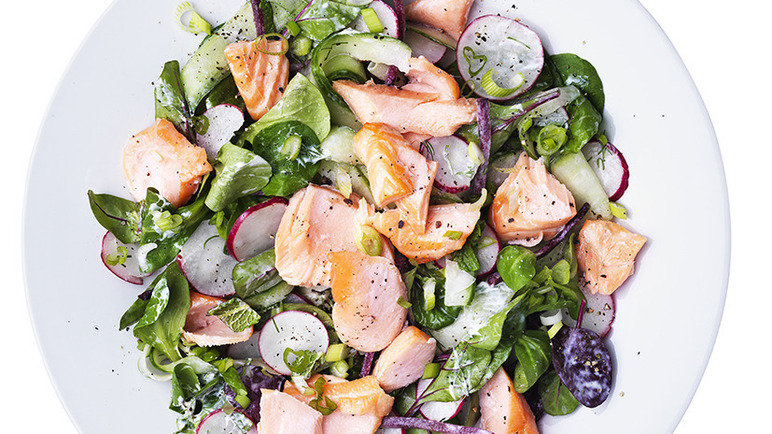
Salmon, Cucumber and Radish Salad : Lovely For Salad Days

Who doesn't enjoy a salad. They are popular in our house!
Take this one, a lovely salad, and with the addition of radishes ...
they add a slight crunch 😋


Ingredients
Serves Four
4 x 120g smoked salmon fillets
1 cucumber
200g radishes
120g bistro salad (e.g. a mix of lettuce, Beetroot, Red Chard) supermarkets often have pre-packed bags
2 tbsp. fresh mint leaves, roughly chopped
3 spring onions (scallions) sliced, to serve
For the dressing
100g (low-fat) Greek yogurt
½ lemon, juiced
2 tbsp. fresh dill

Method
1. Preheat the oven to 200°C/fan 180°C/gas mark 6. Put the salmon fillets on a baking tray and cook for approx. fifteen minutes.
2. Meanwhile, peel the cucumber into long thin strips using a vegetable peeler, and discard the watery core. Slice the radishes into rounds.
3. Combine the yogurt, lemon juice and dill with a little seasoning. Toss together the salad leaves, cucumber, radishes and mint leaves with almost all the dressing. Transfer to a large serving platter. Flake the salmon on top and add the remaining dressing and spring onions.

Nutritional Details
Per serving 6.5g Carbs 29.1g Protein 17.0g Fat

Tip
Smoked mackerel or smoked river cobbler works well and can be substituted for salmon if preferred.
Recipe from original idea here

Radishes are the root of a member of the mustard family, radishes have a peppery flavour and a crisp, crunchy texture. Among the most popular varieties are the small, cherry-sized common variety which has a red skin and white flesh. Radishes are rich in folic acid and potassium and are a good source of vitamin B6, magnesium, riboflavin, and calcium.


Choose the best
Go for firm-skinned radishes, with no blemishes. If they feel soft, they are likely to be spongy inside. Any greens still attached should look fresh and perky. The bigger the radish, the less crisp its texture, so avoid larger examples.

Prepare it
To increase the crispness of radish, soak them in iced water for a couple of hours. Wash, then chop off the greens, if present, then slice off the root. Leave whole, slice or chop, as required.

Always prepare radishes just before using, as they loose their potency when cut. Mooli or daikon radishes can be sliced, diced or grated.

Store it
In a perforated bag in the fridge for around 3-4 days. Always trim the leaves off before storing, as they'll draw moisture from the radish itself. You can keep the radish greens in the fridge, wrapped in moist kitchen paper then stowed in a perforated bag, for a couple of days.
More about radishes here

Regular readers will know that a variety of articles and recipe ideas, are within this blog. It is important to note, not all may be suitable for you. If you may have any food allergies, or underlying health issues these must always be taken into account. If you are a diabetic and not sure how certain foods may affect your blood sugars, test is best, i.e. use your meter. If you have any concerns about your health it is always advisable to consult your Doctor or health care team.

All the best Jan

Wednesday, 5 June 2024

June Birth Flower : Rose

If you are a June baby your birth flowers are the Rose and Honeysuckle. Roses are among the most recognizable flowers, often given as a sign of affection because they have long been a symbol of love. The honeysuckle, with its tubular flowers, is a magnet for hummingbirds and represents happiness and positive energy.


This post is about the Rose...
The rose family (Rosaceae) is made up of more than 100 species of perennial flowering shrubs.

The rose has long been a symbol of love, beauty, and affection. Each colour rose holds a different meaning. A red rose means ‘I love you’ and is a sign of romance; pink represents happiness and admiration; a white rose symbolizes innocence and purity; orange means desire and excitement; and yellow represents cheer and happiness, although some folklore considered it to mean jealousy. A red and white rose paired together has come to symbolize unity.

The Romans viewed roses as a representation of death and rebirth, often planting them at the graves of loved ones.

Roses in History
  • In Colorado, fossil evidence in the form of rose leaves suggests that plants in the rose family date back at least 35 million years.
  • It is estimated that the cultivation of garden roses dates back 5,000 years, beginning in China.
  • It is believed that the oldest living rose is about 1,000 years old. Located at Hildesheim Cathedral in Hildesheim, Germany, the roots of the rose even survived when the cathedral was bombed during the Second World War.
  • During the Roman period, the Middle East was a popular growing location for roses. The petals were used as confetti for celebrations, with the Roman emperor Nero staging rose feasts. Rose petals were also used to scent rooms, for medicinal use, and for perfume fragrance.
  • It is said that Cleopatra filled a room more than a foot deep with rose petals in an effort to win over Mark Antony.
  • The rose was a symbol of war fought between the houses of York and Lancaster for the English throne in the 15th century. The white rose was synonymous with York, while the red rose represented Lancaster. The conflict between the two became known as the “War of the Roses.”
  • During the 17th century, roses were seen as a form of legal tender and used to barter and for payments.
  • French botanical painter Pierre Joseph Redouté created his Les Roses series in the garden of Château de Malmaison, located just outside Paris, France.
  • In 1892, the American Rose Society was established “to promote the culture, preservation, and appreciation of the Rose.”
  • Roses at the White House date back to John Adams’ presidency, but the official launch of the Rose Garden was directed by Ellen Wilson, the wife of 28th President Woodrow Wilson. In 1961, John F. Kennedy had the Rose Garden redesigned as an outdoor venue for receptions.
  • The rose is the National Floral Emblem of the United States.
  • In Italy, roses are celebrated in May, which some refer to as “the month of the rose.”
  • Rose oil has been used for medicinal purposes dating back to ancient China.
  • It is used in skin care, most notably for dry and sensitive skin. Other uses include: as a mild sedative, as an antidepressant, and for stress conditions.
  • Rose petals are brewed for teas and can be used to make potpourri.
I hope you enjoyed this post. One about the month of June other birth flower Honeysuckle will follow shortly. Do you have any Roses growing in your garden?


You may now like to read this post 'Some Foods In Season During June' which also has some recipe suggestions - see here

All the best Jan

Tuesday, 4 June 2024

Foods for Improving Mental Health

Did you know that certain nutrient deficiencies can cause mental health problems like anxiety and depression? This includes nutrients like B vitamins, omega-3s, iron, magnesium, zinc, iodine, and more.

Certain nutrients, such as amino acids, vitamins, and minerals, are essential for the synthesis and function of neurotransmitters, which are chemical messengers that transmit signals between neurons in the brain. Some of these neurotransmitters are things like serotonin, oxytocin, and dopamine - which can play a key role in mood regulation.

Maintaining good mental health is crucial for overall well-being, and one way to support mental wellness is through nutrition. Here are the top five foods you can be eating to help promote overall good mental health:

1. Pasture-Raised Beef
You may not know this, but pasture-raised beef contains a variety of vitamins and minerals that promote good mental health. It’s rich in iron and B vitamins, specifically folate, B6, and B12. These nutrients are crucial for brain health and function. For example, vitamin B12 is involved in neurotransmitter synthesis and mood regulation, while zinc plays a role in cognitive function and stress response. Studies have shown that lower levels of certain B vitamins may be linked to depression.

2. Wild-Caught Fish
Fatty fish like salmon, mackerel, and trout are excellent sources of omega-3 fatty acids, particularly EPA and DHA. These fatty acids are essential for brain health, as they contribute to the structure of brain cell membranes and help regulate neurotransmitter function. Additionally, omega-3s help to lower inflammation, which in turn supports your brain. Consuming omega-3-rich fish regularly has been linked to improved mood and reduced risk of depression.


3. Oysters
Oysters are one of the richest food sources of zinc, an essential mineral involved in numerous physiological processes, including neurotransmitter function, synaptic signalling, and neurogenesis (the formation of new neurons). Adequate zinc intake is crucial for maintaining optimal brain function and mood regulation. Zinc deficiency has been associated with mood disorders such as depression and anxiety. Plus, oysters contain iodine, which can help support a healthy thyroid, also crucial for mood regulation.

4. Leafy Greens
Dark, leafy greens such as spinach, kale, and Swiss chard are packed with vitamins, minerals, and antioxidants that support brain health. They are rich in folate, which plays a crucial role in neurotransmitter synthesis, including serotonin and dopamine, which are important for regulating mood and supporting good mental health. Additionally, the antioxidants in leafy greens contain magnesium and help protect brain cells from oxidative stress.


5. Berries
Berries such as blueberries, strawberries, and blackberries are loaded with antioxidants, particularly flavonoids, which have been shown to have neuroprotective effects. These compounds help reduce inflammation and oxidative stress in the brain, which can contribute to improved cognitive function and mood regulation.
Words above from article here but of course there are other foods that can help support your mental health - foods high in protein and certain fatty acids.

Diets higher in protein can support your mental health. Protein contains chemicals called amino acids, which your brain needs to produce chemicals called neurotransmitters. These help to regulate your thoughts and feelings.

You can find protein in foods like:
Legumes (peas, beans and lentils), Nuts and seeds, Milk, Fish, Eggs, Cheese, Lean meat, Soya products

Your brain needs certain fatty acids, such as omega-3 and omega-6, to keep it working well. You can find these healthy fats in:
Nuts and seeds, Avocados, Oily fish, such as sardines and mackerel (these are often cheaper if you buy them tinned)
You can read more about food and mental health here

Please be aware that articles within this blog are provided for general information only, and should not be treated as a substitute for the medical advice of your own doctor or any other health care professional. If you have any concerns about your general health, you should contact your local health care provider.

All the best Jan

Monday, 3 June 2024

Animal Pizza's - Such Fun

It was half-term holiday last week and the grandchildren had a week off school ... you should have seen their smiling faces 😊

They are never short on fun things to do, and one thing they enjoy making and eating are pizza's ... aren't these animal-shaped pizzas cute! I wonder which one you may choose? The rabbit is a popular choice! 

They are made using muffin bases, and are topped with a speedy tomato sauce that's packed with veg. Fun and yum all in one! Perfect for family gatherings, which both young and old can enjoy.


Ingredients
Makes eight pizzas
4 English muffins, halved
8 cheese slices
3 slices turkey breast
1/2 red pepper, sliced into thin sticks
2 balls of mini mozzarella
4 blueberries, halved
2 cherry tomatoes, halved
8 Kalamata or black pitted olives
¼ yellow pepper
4 baby spinach leaves
2 slices Italian salami

For the hidden veg tomato sauce
1 tbsp olive oil
100g (4oz) mushrooms, sliced
1 trimmed leek*, sliced
1 red or yellow pepper, chopped
1 carrot, grated
small handful fresh basil, chopped
1 x 400g tin tomatoes

*If you don't have any leeks, try using spring onions (scallions) instead

Method
1. Make the hidden vegetable sauce. Heat the oil in a saucepan and cook the mushrooms, leek, pepper and carrot for 10 minutes. Stir in the tomatoes and basil and cook for a further 2-3 mins. Blitz until smooth with a hand-held stick blender or in a food processor. Set aside until ready to make the pizzas or freeze for a later date.
2. Heat the oven to gas 6, 200°C, fan 180°C. Toast the muffins and lay out on 2 lined baking sheets. Top each half with half a tablespoon of tomato sauce and a cheese slice, cutting to the same size as the muffins. Reserve the offcuts to make ears and beaks. Bake for 10 mins, until the cheese is melted and golden.
3. To make the owl, take 2 muffins and put 1 turkey slice onto each, then use the cheese offcuts to make the ears and beak. Add a couple of slices of red pepper strips for the wings and use the mini mozzarella and blueberries for the eyes.
4. To make the cat, cut the remaining turkey slice into 4 triangles for the ears and place on 2 of the muffins. Add blueberries for the eyes, an olive for the nose and red pepper sticks for the whiskers.
5. To make the rabbit, add halved cherry tomatoes to 2 of the muffins for the eyes, add an olive for the nose, 2 chunks of yellow pepper to make the teeth and add 2 spinach leaves for the ears.
6. To make the dog, halve each slice of salami and add to the remaining muffins to make ears. Place a piece of mozzarella in the middle to make the base of the nose, then top with a slice of olive. Use 2 olive slices to make the eyes, then cut the remaining red pepper sticks into tiny pieces and shape into a mouth.
Each serving
Carbohydrate 16.8g Protein 19.5g Fibre 1.4g Fat 9g
From original idea here

Important - If cooking with children always take extra care in the kitchen and supervise as necessary.

Related Post
Mini Pizza's, lower carb alternatives, see here

You will find a variety of articles and recipe suggestions within this blog, and not all may be suitable for you. If you may have any food allergies, or underlying health issues these must always be taken into account. If you are a diabetic and not sure how certain foods may affect your blood sugars, test is best, i.e. use your meter. If you have any concerns about your health it is always advisable to consult your Doctor or health care team.

All the best Jan

Sunday, 2 June 2024

Walking in the rain : How rain can make you happier and healthier

Before I start this post, Eddie and I just want to say thank you to all our readers who visit this blog, and a special thank you for all who take time to leave a comment ... you are all appreciated 😊


How rain can make you happier and healthier.

For many of us, apart from a few sunny days recently, it feels like it has not stopped raining for months and months. I wonder if it has it been like that where you live? But did you know that going for a walk on a rainy day can be good for you?

Scientists have discovered that rain can make us happy and improve our mental health. When it rains, molecules are released into the air and some become negatively charged ions. When we inhale them, it is thought they can help to relieve stress and even boost our energy levels.

Why walk in the rain?

Many of us avoid going out when it is raining, but there could be some good scientific reasons why we should change the way we think about a downpour.

Walking in the rain, or after it has been raining, can actually be good for your body and your mind. Some scientists think it is all down to negative ions. These are odourless, invisible molecules which are created in nature near moving water.

As well as rain, they can come from waterfalls, waves in the sea and even morning dew and mist. Dr Niek Buurma, of Cardiff University’s School of Chemistry, said one way they can be formed is by water, such as raindrops, hitting the ground. "When drops of water hit a hard surface, they break up and in that process, the drops of water, the smaller drops of water, pick up a charge," he said.
"That charge, if it's negative, has additional electrons and those additional electrons can be picked up by molecules in the air, such as oxygen and carbon dioxide and that's how the negative ions are formed."

Research is taking place into the effects of negative ions, but it is thought they may boost our mood, relieve stress and give us more energy. "There are quite a lot of scientific studies that suggest that inhaling these negative ions has a positive effect on your health," said Dr Buurma.

"Nobody really knows exactly why that happens. But there are clear indications that people feel more positive after inhaling negative ions. "There are indications from the scientific literature that exposure to negative ions lifts your mood. It can be used to treat a seasonal affective disorder.

"There is a lot more research to be done because nobody understands exactly why it works. But there does seem to be a correlation."

The air is cleaner during rainfall and after it because raindrops wash dirty particles out of the atmosphere. There is also that unmistakeable smell when it rains after a long period of dry weather.

The earthy scent is called petrichor, from the Greek words petra, meaning "stone", and ichor, meaning "the fluid that flows in the veins of the gods".

Petrichor includes a chemical called geosmin, which is made by bacteria in soil. Inhaling it in the air can have a calming effect.

There are many other positive reasons to go out in the rain.

"It doesn’t have to be walking, it can be a bike ride, a run, or even an amble around your local area, you’ve got the sound, the sensation of it hitting your face, it's very relaxing."

"It’s washed away all the allergens and the dust in the air, it's been good for us to breathe. We’ve probably walked a bit faster, so we've probably burnt off a few more calories.

"We’ve engaged our muscles more, because you worry more about slipping on the wet floor."

"It’s the social aspect as well. If you're out in your local community, your local green spaces or maybe a bit further afield, you get the social benefits of seeing other people.

"That's really good to help you connect to the place that you're in, the environment and you get that nature connection as well.

"It’s really important... whether you're 18 months, 18 years old or 80 years old, that you get out into your natural environment."

Words above taken from article here image is from Google.

~ xxx ooo xxx ~

Just a thought ... walking is one of the easiest ways to get active, it’s free and may help you lose weight and feel better. Often overlooked as a form of exercise, when done at a suitable pace and over sufficient distance, walking can help improve stamina and cardiovascular fitness and may even help you live longer.

However, if you are new to exercise, have an underlying medical condition or existing injuries please consult a doctor before embarking on any new exercise programme.

As always many thanks for your visit to this blog and please share your thoughts in the comments below.

All the best Jan

Saturday, 1 June 2024

Welcome June 2024


As we welcome June - did you know:-
June used to be the fourth month in the year. Before Julius Caesar came to power, the calendar year only had 10 months. In 46 BC he created the Julian calendar by adding two more months to the year, which made June the sixth month.

June was called the “sera monath” (also known as dry month) by the Anglo-Saxons.

The month of June is believed to be named after Juno the Greek goddess.

The beautiful Rose and Honeysuckle are the birth flowers of June.

June has three birthstones – alexandrite, moonstone, and pearl. Alexandrite is said to represent longevity and health. Moonstones on the other hand are said to bring good luck and are associated with love and passion. Finally, we have pearls, the main birthstones of June. Above all else, pearls represent purity and faith.

If you were born in June, then you’re one of two star signs. If you were born on or before June 20th then you’re a Gemini. Gemini’s are said to be passionate, adaptable, and smart. If you’re born on or after the 21st of June, then you have the Cancer star sign. Those born under the Cancer sign are said to be loyal friends with great emotional depth.

The 5th of June is the World Environment Day, which raises awareness about our environment across the planet.

The 16th of June is Fresh veggies day.

June 16th (in 2024) is also Father’s Day - why not treat him to a Caprese Omelette for breakfast ... it's delicious, see below

June 20th is the summer solstice, which heralds the start of summer in the Northern Hemisphere. It’s the day with the most hours of daylight, so enjoy! In the Southern Hemisphere, winter begins at this time.

June is the month of the year that consists of the most daylight hours in the Northern hemisphere. In contrast, it consists of the least daylight hours in the Southern hemisphere.


Caprese Omelette
Now, here is a piece of Italy in a bite!
This omelette gives you all the flavours from a Caprese salad in a filling, but low-carb, omelette.
Just great for a sturdy breakfast, lunch or even a light dinner...
I wonder when may you serve yours?
more details here

~ Wishing you a happy June 2024 ~

Dear reader, you will find a variety of articles, studies etc. plus recent news/views and recipe ideas within this blog, we hope something for everyone to read and enjoy ... but please note, not all may be suitable for you. If you may have any food allergies, or underlying health issues these must always be taken into account. If you are a diabetic and not sure how certain foods may affect your blood sugars, test is best, i.e. use your meter. If you have any concerns about your health, it is always advisable to consult your doctor or health care team.

All the best Jan

Thursday, 30 May 2024

Low Carb/Keto On A Budget

We are all finding our weekly shopping bill is getting higher and higher. When it comes to living a low carb/keto lifestyle many people believe this type of diet has to be expensive. Yes, some low-carb foods are expensive, BUT not all. You don’t need expensive ingredients. You can eat totally delicious and healthy low-carb meals that are super cheap.

There are many things you can do straight away to save money. Below you can read tips on planning and shopping, and I hope you find them helpful.


1. Plan
Planning your low carb meals and shopping is a great way to ensure meals are organized for the week ahead. You get to buy only what you need, and you won’t be relying on emergency takeaways. See what’s in your pantry and fridge already, then plan meals that will use these ingredients to stop food wastage.

Planning shopping lists helps you stop unnecessary spending and impulse purchases. Did you know that each week many of us spend on average 17% of our grocery budget on impulse purchases!

Also, bargain deals may appear to be good value. But naturally you save even more if you don’t buy additional foods at all.

Make a shopping list, and stick to it. Preferably only buy the things you need.

Shop
Buy cheaper alternatives! Some low carb foods are ridiculously expensive, but there are plenty of cheaper options which are just as delicious, simple and healthy.
  • Buy regular cheese, not specialty cheeses that can be pricey. Don’t buy pre­shredded/grated cheese, buy in bulk and shred/grate it yourself.
  • Make your own coleslaw and avoid expensive ready-made coleslaw. Coleslaw is incredibly easy and cheap to make yourself in your food processor.
  • Buy simple meats, not specialty cooked meats from the deli. Cooked meat can be great for a quick simple meal, but stick to the less exotic and cheaper meat such as cooked roast beef or chicken drumsticks.
  • Put back the kale that can cost a fortune and buy other leafy greens that are just as nutritious but much cheaper.
  • Stop buying nuts because they can soon add up, especially macadamias. Walnuts, almonds and brazil nuts are cheaper alternatives or stop buying them altogether. 
  • Buy almond meal, not almond flour which can be expensive. Almond meal is cheaper and interchangeable in most recipes. You can even make your own ground almonds in your coffee grinder.
  • Buy avocado oil not avocados when they are out of season and expensive.
  • Buy frozen or canned fish rather than fresh which can be a real budget breaker, especially salmon. Canned tuna and mackerel are cheap handy snacks to have in the pantry.

Buy the best quality you can afford
Organic vegetables have less pesticides, grass fed meat has superior nutrition and free range eggs are nutritious but expensive. Unfortunately these are simply out of the reach for those who need help the most, and who are living to a strict grocery budget.

For someone living on a diet of sodas, fries and fast food, swapping to regular eggs, regular vegetables and regular meat will still have an enormous impact on their health. The single most important factor to improve your health, is to cook from scratch, at home.

Buy free range eggs as often as your budget will allow, but regular eggs will still be a better breakfast option than high­-sugar cereals.

Buy in season
Buy in season and eat in season. Many vegetables can be bought when they are cheap and frozen. There are many cheap low-­carb ­freezer staples such as berries, spinach and cauliflower which are just as nutritious as fresh but much cheaper.

Buy bargains
Buy cheaper store brands, buy discounted food near its expiry date, buy misshapen vegetables, buy food with damaged packaging, buy from your local farmer’s market, and buy regular food not specialty foods from the deli counter.

Buy in bulk
Find a local butcher, and buy in bulk. Buy canned and frozen goods when they are discounted. Buying in bulk often attracts extra discounts and you know you will have a pantry and freezer full of ingredients just waiting to be turned into a meal.

Buy organ meat
Organ meat is incredibly cheap and very nutritious. I know it's not everyone's favourite but liver gram for gram provides more nutrients than almost any other type of meat. If you don’t like eating liver, use it diced finely in a dish such as chilli to bulk up the ground beef. Liver is cheap and incredibly nutritious.

Buy cheaper cuts of meat
Don’t buy the expensive lean meats, buy the cheaper fatty ground meat, buy the fatty pork chops, and buy the cheap chicken that still has the skin on.

Buy the cheap casserole/stewing meat and learn to love your slow cooker. It will transform cheap cuts of meat into tender meat and a tasty meal.

Find a local butcher who sells pork skins to make your own crackling which is a perfect low carb snack.

Use bones from a roast dinner or from the butcher to make bone broth.

xxx ooo xxx

I do hope you find these tips helpful, and if you have any do please share them in the comments.

You may like to read the article on Diet Doctor site 'How to make a low-carb or keto diet cheaper' where the above words and more can be seen, find it here

There is a related post, 'Introduction to low-carb for beginners' which can be read here

All the best Jan

Wednesday, 29 May 2024

Summer vegetable and butter bean stew : A slow cooker recipe


'A slow cooker is the pinnacle of low-maintenance cooking. Place the ingredients inside, turn it on, and let it cook. Your only thought is how delicious that meal is going to taste.'
Read more about slow cookers here

This recipe is an easy-going, vegan/vegetarian, slow-cooked summer vegetable stew. Serve as a main course with crusty bread to mop up the juices, or as a warm salad along with other sharing plates.

Ingredients
Serves 2/3
2 red, orange or yellow peppers, roughly diced
1 small courgette (zucchini), diced
½ aubergine (eggplant), diced
1 small red onion, finely sliced
1 small fennel bulb (or ½ a large one), finely sliced
3 large ripe tomatoes, finely diced
2 large garlic cloves, crushed
small handful fresh oregano leaves, roughly chopped, or ½ tsp dried oregano
15g/½oz basil, plus extra small leaves to serve
3 tbsp extra virgin olive oil, plus extra to serve
60g/2¼oz marinated olives in oil
400g tin butter beans, drained
1 tbsp sherry vinegar or balsamic vinegar
salt and freshly ground black pepper
fresh bread, to serve
(some low carb bread recipe suggestions here)

Method
1. Preheat the slow cooker to high.
2. Add all the chopped veg to the slow cooker pot and stir in the garlic, oregano, half the basil and the olive oil. Season generously with salt and pepper, cover with the lid and cook for 2 hours.
3. Stir in the olives, butter beans and vinegar and cook for another 15–20 minutes until the veg is all tender. Taste and adjust the seasoning. Stir through the remaining basil.
4. Finish with a scattering of small basil leaves and a drizzle of olive oil. Serve with fresh bread.
From original idea here

Did you know that butter beans are high in vitamin C, vitamin A, and thiamine, they are also a good source of protein - more details here

Some readers may also be interested in seeing these two slow cooker recipes
Chicken Casserole recipe here
Beef Stew recipe here

Dear reader, this blog is presented in a magazine style - we hope something for everyone. You will find a variety of articles, studies, thoughts, cartoons, photographs, music and recipes!

However, not all the recipes ideas featured in this blog may be suitable for you. If you may have any food allergies, or underlying health issues these must always be taken into account. If you are a diabetic and not sure how certain foods may affect your blood sugars, test is best, i.e. use your meter. If you have any concerns about your health, it is always advisable to consult your doctor or health care team.

All the best Jan

Tuesday, 28 May 2024

Vitamin B12 : Signs and Symptoms of Deficiency


Signs and Symptoms of Vitamin B12 Deficiency

Even though the vitamin is found in many foods, B12 insufficiency and deficiency are relatively common. Low B12 symptoms can vary from physical to psychological.

Vitamin B12 is an essential nutrient that your body needs for processes like DNA synthesis, energy production, and central nervous system function.

Studies suggest that up to 20% of people over the age of 60 in the United States and the United Kingdom are deficient in the vitamin. This is often due to limited dietary intake, malabsorption, medical conditions, or the use of B12-depleting medications.

Because the ability to absorb B12 from food declines with age, deficiency is more common in older adults. Still, that doesn’t mean children and younger adults, including those who are pregnant and nursing, can’t develop B12 deficiency. 

B12 deficiency is often misdiagnosed, often due to inadequate laboratory testing or because the symptoms are not specific.

Here are nine of the most commonly reported symptoms related to B12 deficiency 

1. Fatigue
If you’re low or deficient in B12, you’ll likely feel fatigued. Your body’s cells need B12 to function properly. As such, having inadequate B12 levels can decrease normal red blood cell production, which can impair oxygen delivery.

2. Pale or yellow skin
Like the condition called iron deficiency anaemia, anaemia related to B12 deficiency may make your skin pale due to a lack of fully-matured, healthy red blood cells in the body. B12 deficiency can also cause a condition called jaundice, which makes your skin and the whites of your eyes take on a yellowish colour due to high levels of bilirubin.

3. Headaches
Headaches are among the most commonly reported symptoms related to B12 deficiency in both adults and children.

4. Depressive symptoms
B12 deficiency is associated with a greater risk of developing depression. Having low levels of B12 can cause elevated levels of a sulphur-containing amino acid called homocysteine. In turn, this may contribute to the development of depression by increasing oxidative stress, DNA damage, and cell death in the body.

5. Gastrointestinal issues
A B12 deficiency may also cause diarrhoea, nausea, constipation, bloating, gas, and other gastrointestinal symptoms. These issues can affect both adults and children.

6. Difficulty concentrating and mental impairment
Because a deficiency in B12 negatively impacts the central nervous system, people with low or deficient B12 levels may feel foggy-headed and have difficulty concentrating and completing tasks. Many studies have associated low B12 levels with worsened mental function in older adults. Fortunately, studies show that mental impairment related to low B12 levels can improve with B12 treatment.

7. Pain and inflammation of the mouth and tongue
Glossitis is a medical term that refers to an inflamed, red, and painful tongue. It can be caused by a B12 deficiency. In people with this deficiency, glossitis can appear alongside stomatitis, which is characterized by sores and inflammation in the mouth.

8. Paraesthesia in hands and feet
Many adults and children who have B12 deficiency report experiencing paraesthesia, a burning or pins-and-needles sensation in certain areas of the body like the hands and feet.

Unfortunately, this symptom of B12 deficiency overlaps with symptoms related to diabetic neuropathy — nerve damage caused by high blood sugar that can cause pain and numbness in the extremities.

People with diabetes taking metformin are at a higher risk of developing B12 deficiency because this medication can reduce vitamin B12 absorption in the body.

So, a B12 deficiency could be misdiagnosed as peripheral neuropathy in people with diabetes.

As a result, many experts recommend that people taking metformin regularly get screened for vitamin B12 deficiency.

9. Other signs and symptoms of B12 deficiency
In addition to the symptoms above, B12 deficiency may lead to the following:

Muscle cramps and muscle weakness: B12 deficiency negatively impacts motor and sensory nerve function, which can cause muscle cramps and weakness.

Impaired coordination: Ataxia, or impaired balance and coordination, is a neurological symptom that can be caused by B12 deficiency. As such, a person with B12 deficiency may have difficulty walking and balancing
.

Erectile dysfunction: Men with B12 deficiency may experience erectile dysfunction as a result of increased levels of homocysteine in the body.

Vision disturbances: B12 deficiency may cause vision disturbances, possibly due to damage to the optic nerve.

How is B12 deficiency detected and treated?
Because vitamin B12 deficiency symptoms aren’t specific to the condition, it may go undetected or get misdiagnosed.

If you are experiencing any of the symptoms listed above, it is important to discuss them with a healthcare professional.

This is especially relevant if you:
  • follow a restrictive diet, like a vegan diet
  • are over the age of 60
  • are pregnant or nursing
  • have a medical condition that can deplete B12 levels
  • take a B12-depleting medication, like metformin or proton pump inhibitors
In addition to learning about your symptoms and giving you a physical exam, a healthcare professional can rule out a B12 deficiency by ordering various blood tests. If you are diagnosed with too low B12 levels, your healthcare professional will recommend the most appropriate treatment.

Frequently Asked Questions
What is the fastest way to fix B12 deficiency?

Treatment of B12 deficiency typically includes oral supplements or injections.

What is the main cause of vitamin B12 deficiency?

Typically vitamin B12 deficiency develops because you’re not eating enough B12-rich foods like fish and shellfish, organ meats, and eggs. For example, this is common among people who follow a vegan diet. In addition, certain medical conditions and medications can cause vitamin B12 deficiency.

What are the 4 stages of B12 deficiency?

The 4 stages of B12 deficiency include:
  • Stage 1: decreased levels of vitamin B12 in your blood
  • Stage 2: low levels of vitamin B12 in your cells along with metabolic abnormalities
  • Stage 3: neurological and psychological symptoms like anxiety, confusion, problems with balance, and others
  • Stage 4: macrocytic anaemia – very large red blood cells
The bottom line
B12 deficiency can cause a variety of symptoms, including fatigue, headaches, depression, pale or yellow skin, mental impairment, and pain and inflammation in the mouth and tongue.

Many of the symptoms caused by low B12 levels are not specific to B12 deficiency, which can cause the condition to go undetected.

If you are experiencing any of the symptoms listed above, it is important to visit a healthcare professional to undergo appropriate testing and get the right treatment.

Words above taken from a 'Healthline' article which you can read in full and with all relevant research links here

Please note that articles within this blog are provided for general information only and should not be treated as a substitute for the medical advice of your own doctor or any other health care professional. If you have any concerns about your general health, you should contact your local health care provider.

All the best Jan

Monday, 27 May 2024

Crustless Quiche Lorraine : Low Carb : Serve With A Green Salad


"This simplified version of the classic French tart requires no pastry skills, reducing the prep and cooking times. It is delicious served warm from the oven or cold as leftovers the following day, making it a great option for a work lunch or picnic"... and fits well with my LCHF menu plans!

Ingredients
Serves Four
low-calorie cooking spray
8 lean bacon rashers, roughly chopped
1 onion, finely chopped
6 large free-range eggs
100g/3½oz Cheddar, grated
2 tbsp chopped fresh tarragon
2 tbsp finely chopped fresh chives
100g/3½oz cherry tomatoes, halved or quartered
salt and freshly ground black pepper
crisp green salad, to serve

Method
1. Preheat the oven to 180C/160C Fan/Gas 4.
2. Spray a large frying pan with low-calorie cooking spray. Add the bacon and onion and stir-fry over a medium heat for 10 minutes, or until the onions have softened and the bacon is cooked.
3. Whisk the eggs in a wide bowl and stir in half the cheese and 1 tablespoon each of the tarragon and chives. Stir in half of the bacon and onion mixture. Season well with salt and pepper.
4. Lightly spray a 20–22cm/8–8½in round ovenproof dish or non-stick pie tin with low-calorie cooking spray. Pour in the egg mixture. Scatter over the remaining bacon and onion mixture, cheese, herbs and the cherry tomatoes. Bake for 30–35 minutes, or until just set and golden. Serve warm or cold, sliced into wedges with a crisp green salad of your choice.
From original idea here


pretty lily-of-the-valley, you can read more about these flowers here

~ wishing all readers a happy day ~

Please note, this blog brings a variety of recipe suggestions and not all may be suitable for you. If you may have any food allergies, or underlying health issues these must always be taken into account. If you are a diabetic and not sure how certain foods may affect your blood sugars, test is best, i.e. use your meter. If you have any concerns about your health, it is always advisable to consult your doctor or health care team.

All the best Jan

Sunday, 26 May 2024

Spring-time in Lyndhurst


Swan Green, Lyndhurst, New Forest
Photograph Credit Elizabeth Lloyd


These little fellas seen at Lyndhurst, New Forest
Photograph Credit Hang Ross

Lyndhurst has long been recognised as the ‘unofficial capital’ of the New Forest, and is a very pleasant place to visit. At the top end of the High Street the spire of Lyndhurst’s St. Michael’s & All Angels church is clearly visible. The church sits opposite the Tudor-beamed Crown Hotel, which is another famous Lyndhurst landmark. 
The Church has stained glass windows by Edward Burne-Jones, Charles Kempe and William Morris. 


Alice Liddell, the girl who inspired Lewis Carroll’s classic book Alice’s Adventures in Wonderland, lived in Lyndhurst after her marriage to Reginald Hargreaves, and within the grounds of the church is her grave.

Then of course you have Swan Green which is very picturesque. The green is overlooked by picturesque thatched cottages, and the home of a well-used cricket pitch. Horses and ponies like it it too, and it is one of the most photographed locations in the New Forest 

The first recorded history of Lyndhurst was in 980. Over the centuries Lyndhurst became the haunt of royalty, nobility and commoner alike. It was also a magnet for artists, writers and professionals of all kinds.

Not far from Lyndhurst you have the village of Minstead where Sir Arthur Conan Doyle, creator of Sherlock Holmes, is buried in Minstead Churchyard.

Definitely lots to see and do, or just enjoy a stroll and a cup of tea in a nearby café.

Wishing all readers a happy Sunday.

All the best Jan